
Discover how operational efficiency with AI in manufacturing transforms production lines, reduces costs, and boosts productivity. Explore cutting-edge AI solutions for smarter factories today.
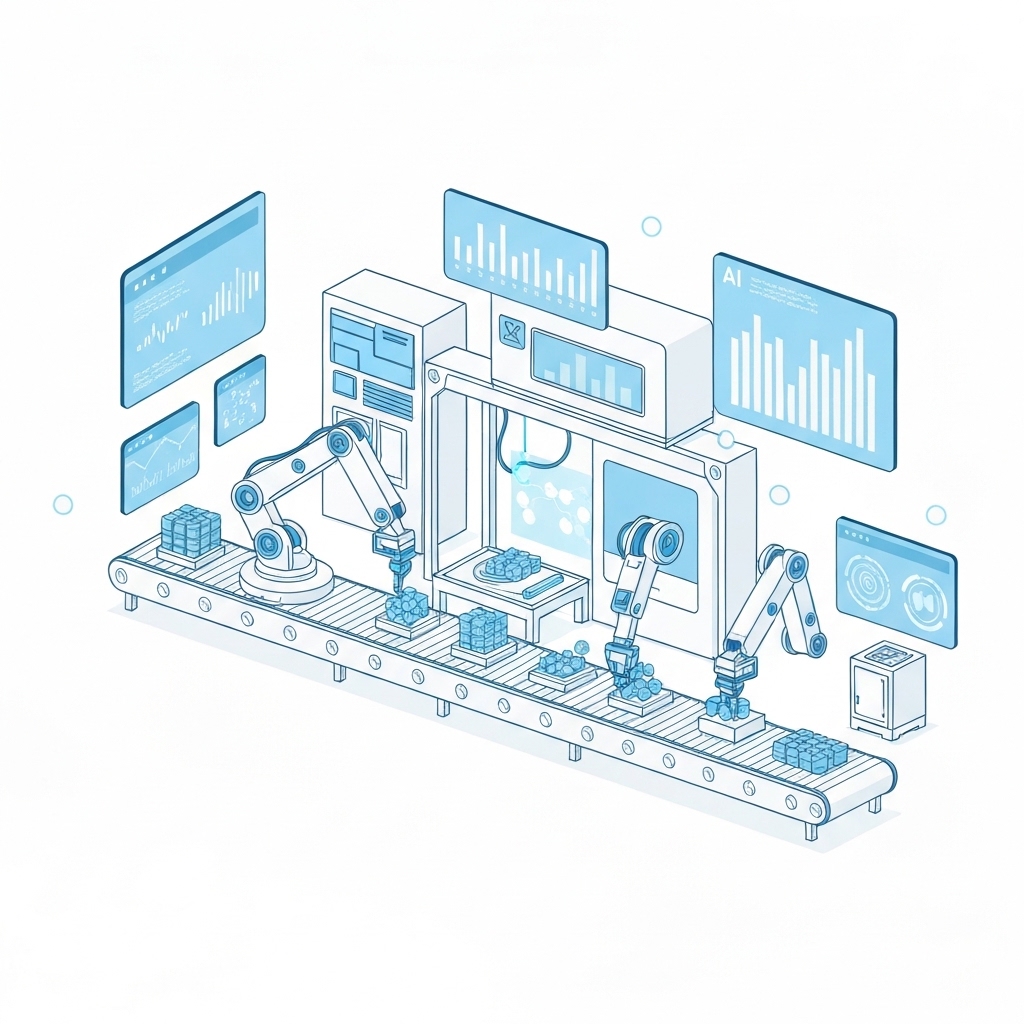
In the fast-paced world of manufacturing, companies face constant pressure to reduce costs, enhance quality, and speed up production cycles. Artificial Intelligence (AI) has emerged as a transformative force, redefining operational efficiency in the industry. By leveraging AI-powered tools and technologies, manufacturers are achieving unprecedented levels of productivity, precision, and profitability. This article explores how AI is revolutionizing manufacturing, its key areas of impact, and practical strategies for implementation.
Why AI is a Game-Changer for Manufacturing
AI’s ability to process vast amounts of data, identify patterns, and make real-time decisions has made it an indispensable asset for modern manufacturing. Unlike traditional systems, AI adapts and learns from new information, enabling factories to become more agile, responsive, and efficient.
Here’s why AI is a game-changer:
- Predictive Maintenance: AI predicts equipment failures before they occur, reducing downtime and maintenance costs.
- Quality Control: AI-powered vision systems detect defects with unparalleled accuracy, ensuring higher product quality.
- Supply Chain Optimization: AI analyzes demand patterns and optimizes inventory levels, minimizing waste and delays.
- Energy Efficiency: AI monitors and adjusts energy consumption in real time, lowering operational costs and environmental impact.
- Workforce Augmentation: AI automates repetitive tasks, freeing up human workers to focus on higher-value activities.
By integrating AI into their operations, manufacturers can gain a competitive edge in a crowded market.
Key Applications of AI in Manufacturing
1. Predictive Maintenance
Unplanned downtime is a major challenge in manufacturing, costing companies millions annually. AI-driven predictive maintenance uses machine learning algorithms to analyze sensor data from machinery and predict equipment failures. For example, General Electric (GE) employs AI to monitor industrial turbines, reducing unplanned downtime by up to 50%. This proactive approach saves time, money, and resources.
2. Quality Control and Defect Detection
AI-powered computer vision systems are transforming quality control. These systems inspect products at high speeds, identifying defects invisible to the human eye. In the automotive industry, AI detects imperfections in paint finishes or welds, ensuring every vehicle meets quality standards. Companies like Tesla use AI to monitor assembly lines in real time, reducing defect rates and improving customer satisfaction.
3. Supply Chain Optimization
AI revolutionizes supply chain management by providing real-time insights into inventory levels, demand forecasts, and logistics. By analyzing historical data and external factors like weather and geopolitical events, AI helps manufacturers optimize inventory, reduce lead times, and minimize stockouts. Procter & Gamble, for instance, uses AI to forecast demand, ensuring products are available when and where needed, reducing waste and improving efficiency.
4. Smart Manufacturing with IoT and AI
The combination of AI and the Internet of Things (IoT) has given rise to Industry 4.0, the fourth industrial revolution. IoT devices collect data from factory floors, while AI analyzes this data to optimize processes, improve efficiency, and enable autonomous decision-making. Siemens’ AI-powered systems monitor production lines, adjust settings in real time, and predict bottlenecks, setting new standards for operational efficiency.
5. Energy Management
Manufacturing is energy-intensive, and AI helps companies reduce their carbon footprint while cutting costs. AI algorithms analyze energy consumption patterns and identify optimization opportunities. For example, AI adjusts lighting, heating, and cooling systems based on real-time data, ensuring energy is used efficiently. Companies like Schneider Electric use AI to achieve energy savings of up to 30%, contributing to sustainability and profitability.
Overcoming Challenges in AI Adoption
While AI’s benefits are clear, adoption comes with challenges. Here’s how to overcome them:
1. Data Quality and Availability
AI relies on high-quality data. Many manufacturers struggle with siloed systems and outdated infrastructure. Investing in modern IT systems and robust data governance practices is essential to address this.
2. Skill Gaps
The manufacturing workforce often lacks the technical skills needed for AI implementation. Training programs, partnerships with AI experts, and hiring data scientists can bridge this gap.
3. Cost of Implementation
AI solutions can be expensive, especially for small and medium-sized enterprises (SMEs). However, the long-term ROI often justifies the investment. Grants and incentives from governments and industry organizations can also support adoption.
4. Resistance to Change
Employees may resist AI due to fears of job displacement. Communicating AI’s benefits and emphasizing its role in augmenting human capabilities can foster buy-in. Involving workers in the implementation process also helps.
Practical Steps to Implement AI in Manufacturing
Ready to harness AI’s power? Follow these steps:
1. Assess Your Needs
Identify areas where AI can deliver the most impact, such as maintenance, quality control, or supply chain management. Analyze current processes and pain points.
2. Invest in Infrastructure
Equip your factory with sensors, IoT devices, and data storage capabilities. Cloud-based solutions offer scalability and flexibility.
3. Choose the Right AI Tools
Select AI solutions that align with your needs and budget. Choose vendors with a proven track record in manufacturing.
4. Pilot Projects
Start small with pilot projects to test AI’s effectiveness in a controlled environment. Refine your approach and measure results before scaling up.
5. Monitor and Optimize
Continuously monitor AI system performance and make adjustments. AI requires ongoing optimization to deliver maximum value.
The Future of AI in Manufacturing
As AI evolves, its impact on manufacturing will grow. Emerging trends like generative AI, digital twins, and edge computing will further enhance operational efficiency. Generative AI can design products or optimize processes at unprecedented speeds. Digital twins enable risk-free simulations, while edge computing reduces latency for real-time decision-making. The factories of the future will be smarter, more connected, and more efficient, thanks to AI.
Conclusion
Operational efficiency with AI in manufacturing is not just a trend—it’s a necessity for staying competitive. By embracing AI-powered solutions, manufacturers can reduce costs, improve quality, and accelerate production cycles, all while minimizing environmental impact. The journey to AI adoption may be challenging, but the rewards are worth it. As technology advances, the possibilities for innovation in manufacturing are limitless. The question is no longer if AI will transform manufacturing, but how soon you will join the revolution.