

Skip to content
Mr Dashboard
  • Products
    • Execution OS
    • KPI Reporting
    • Financial Engineering
    • Strategy Playbooks
  • Hub
    • Guides
    • Manufacturing
    • Strategy & Growth
    • KPI & Measurement
    • Finance & Financial Management
    • Costing & Profitability
    • Operational KPIs & Dashboards
    • Supplier Performance & Procurement
    • Sales & Business Development Dashboards
    • AI for Business Strategy & Operations
    • Insights
  • Subscribe
  • About Us
  • Contact
  • App

Financial Analysis for Executives

📋 Advanced financial analysis guide:

1. Problem Framing
2. Objectives & Metrics
3. Stakeholders
4. Data Foundation
5. Framework Overview
6. Cost Structure
7. Revenue Realization
8. Capital Allocation
9. Risk & Reliability
10. Scenario Modeling
11. Sensitivity Analysis
12. Governance
13. Implementation
14. Performance Monitoring
15. Change Management
16. Conclusion

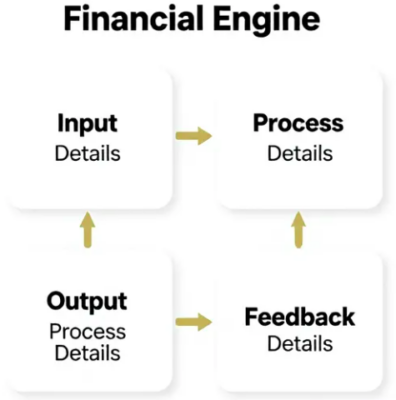
Financial analysis engine diagram showing data inputs, quality gates, throughput metrics, and feedback loops

Financial analysis isn’t about spreadsheets—it’s about engine performance. For executives, it’s the difference between guessing and knowing where to apply pressure for maximum throughput.

1. Performance Driven Financial Analysis for Executives

In this mandate, the core financial question is: what is the system’s cash flow throughput, from revenue recognition to net cash, and where do bottlenecks limit profit, liquidity and capital efficiency?

Identify Bottlenecks

  • Cash conversion bottlenecks: days sales outstanding (DSO) and days payable outstanding (DPO) gaps that throttle working capital.
  • Throughput inhibitors: project churn, scope creep, and cost overruns that erode contribution margins.
  • Capital efficiency bottlenecks: high asset turn time, underutilized capacity, and delayed ROI on critical investments.

Establish Throughput Targets

  • Cash flow throughput: target net cash inflows within 30 days of invoicing, with a maximum 45-day cycle for strategic projects.
  • Profitability throughput: maintain contribution margin above a defined threshold per project, even with baseline cost volatility.
  • Capital efficiency throughput: achieve asset turnover and ROI targets that align with project lifecycles and deployment cadence.

These targets translate into measurable metrics: DSO, DPO, gross and net margin, project burn rate and return on invested capital, enabling a systems view of financial performance.

2. Objectives and Metrics: Maximizing Throughput, Velocity and Minimizing Cost of Delay

In the complex machinery of business, financial analysis acts as the precision tool to optimize performance.

Key Financial KPIs

  • Return on Investment (ROI): Measures the engine’s efficiency, ensuring every dollar invested generates maximum value.
  • Net Present Value (NPV): Evaluates the project’s long-term profitability, considering the time value of money.
  • Internal Rate of Return (IRR): Identifies the project’s growth rate, indicating its potential to outperform alternative investments.
  • Payback Period: Assesses the time required to recover initial investments, crucial for understanding liquidity.

These KPIs are the gauges on the dashboard of financial performance, providing insights into the system’s efficiency, profitability and liquidity.

System Throughput and Time-to-Value

By analyzing these metrics, we can identify bottlenecks and optimize processes to increase throughput, ensuring faster time-to-value and minimizing the cost of delay.

3. Stakeholders and Boundaries

Scope boundaries: define data sources as the core fuel for financial analysis – ERP general ledger, project accounting, and approved budgets – while excluding non-financial metrics unless tied to a direct cost or revenue impact.

  • Primary consumers: executive leadership, finance, project managers, and department heads who rely on timely, accurate throughput metrics to identify bottlenecks and drive optimization.
  • Secondary consumers: auditors and compliance officers who require traceable data lineage and change control to ensure integrity across the financial engine.
  • Data boundaries: establish data provenance, currency, and versioning; lock settings to prevent inputs from peripheral systems unless explicitly sanctioned.

Requirement flow

Map how each insight travels from source to decision, mirroring a production line where inputs (data sources) feed processing stages (transformation, validation, aggregation) and outputs (reports, dashboards) reach the right stakeholder at the right cadence.

  • Link each metric to a business objective and owner to minimize drift and ensure accountability.
  • Define acceptance criteria for data quality, timeliness, and relevancy to avert scope creep.
  • Implement change control: any new metric requires impact assessment, approval, and a documented data lineage.

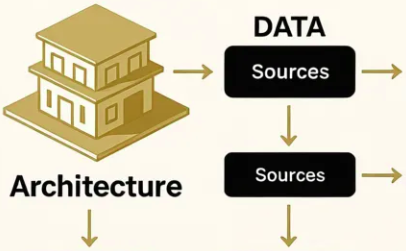
Financial architecture systems data flow

4. Data Foundation: Input Architecture for Financial Signals

Establish a robust input architecture that guarantees reliable financial signals by aligning data sources, quality gates, and lineage with systems engineering principles.

Data Sources

  • Market feeds: price, volume, and quote snapshots from validated exchanges.
  • Fundamental data: earnings, balance sheets, and macro indicators from trusted providers.
  • Alternative data: satellite, sentiment, and transactional data vetted for relevance and timing.
  • Internal signals: proprietary metrics standardized across platforms.

Quality Gates

  • Schema validation: enforce data types, units, and currency normalization.
  • Timeliness checks: verify latency budgets and data freshness against SLAs.
  • Integrity tests: detect gaps, duplicates, and out-of-range values with automated alerts.
  • Sanity constraints: cross-check signals against corroborating sources to prevent false positives.
  • Traceability: preserve audit trails for source, processing, and transformation steps.

Data Lineage

  • Capture lineage from source ingest through transformation to analytics outputs.
  • Versioned pipelines: enable rollback and impact assessment for model recalibration.
  • Metadata catalog: index data quality attributes, refresh schedules, and responsible owners.
  • Access controls: enforce least-privilege data access aligned with governance policies.

Outcome: A dependable input backbone that minimizes bottlenecks and sustains engine throughput for financial analysis.

5. Framework Overview: The Systems-Driven Financial Analysis Model

The model maps inputs to outputs through a repeatable, engine-like process flow, where each subsystem represents a financial input, action, or decision point that drives measurable throughput.

Core Inputs

  • Revenue streams and growth drivers
  • Cost structure and operating expenses
  • Capital investments and depreciation schedules
  • Working capital dynamics and financing costs

Process Flow

  • Collects data from source systems into a centralized ledger, then normalizes it for comparability.
  • Applies driver-based assumptions to translate strategic intent into financial outputs.
  • Runs scenario engines to stress-test bottlenecks and capacity constraints.
  • Calculates key performance metrics (margins, ROI, payback) as engine outputs.
  • Feeds results into a decision dashboard that highlights bottlenecks and levers.

Outputs

  • Financial health indicators and throughput metrics
  • Identification of bottlenecks and recommended interventions
  • Scenario-based forecasts with confidence bands

Guiding principle: treat the financial model as an engine map where inputs are fuels, processes are pistons, and outputs are performance signals guiding strategic throttle and timing.

Financial strategy cost structures

6. Cost Structure Decomposition: Fixed vs. Variable Costs

The cost engine is decomposed into fixed and variable components to reveal throughput bottlenecks and upstream leverage points in the enterprise engine.

Fixed Costs

  • Capital amortization and depreciation load the baseline engine, constraining spare capacity and limiting responsiveness to demand shifts.
  • Facilities, salaries, and core system licenses provide a steady overhead that must be covered regardless of throughput.
  • Strategic commitments (long-term contracts, compliance obligations) create inertia that can dampen agility in peak loads.

Variable Costs

  • Direct labor and materials scale with activity, acting as the primary fuel for throughput changes.
  • Transaction costs and outsourcing vary with volume, offering quick amplification or suppression of line capacity.
  • Energy and maintenance costs rise with utilization, signaling the engine’s wear and potential friction points.

Leverage Points

  • Shift cost mix by optimizing shift schedules, automation, and supplier terms to reduce marginal cost per unit.
  • Increase fixed-cost investments in scalable platforms if marginal benefits of throughput surpass fixed amortization penalties.
  • Target bottlenecks (throughput constraints) with rate-limiting controls to maximize marginal impact.

Modeling Marginal Throughput

Attach a marginal cost curve to each activity to estimate throughput gain per additional dollar, enabling a cohesive view of where investment yields the greatest engine horsepower.

7. Revenue Realization: Timing, Recognition, and Revenue Engines

Revenue streams operate as dynamic subsystems within the firm’s core engine, each with defined cycle times, throughput targets, and fault modes that can throttle overall performance.

Revenue Cycle Timings

Cycle time measures the duration from order inception to cash realization. Shorter cycles raise throughput and free capacity for new work, while longer cycles risk bottlenecks that depress engine RPM and erode margins.

Revenue Recognition Rules

Recognition policies act as governance subsystems, ensuring that timing aligns with performance milestones, quality confirmation, and contract terms. Misalignment creates a fault mode: revenue recognition delay reduces perceived throughput and destabilizes forecasting.

Subsystem Fault Modes

  • Delays in invoicing or payment terms stall cash flow and diminish engine efficiency.
  • Quality/acceptance failures trigger rework cycles, increasing cycle time and reducing net throughput.
  • Misalignment with delivery milestones causes premature or delayed recognition, introducing variability into revenue streams.
  • Pricing pressure leads to throughput degradation due to discounting or diversion of demand signals.

Optimization Levers

  • Synchronize order intake with capacity planning to minimize idle time.
  • Standardize recognition rules and automate invoicing to reduce human bottlenecks.
  • Monitor leading indicators of potential faults and deploy rapid remedial cycles.

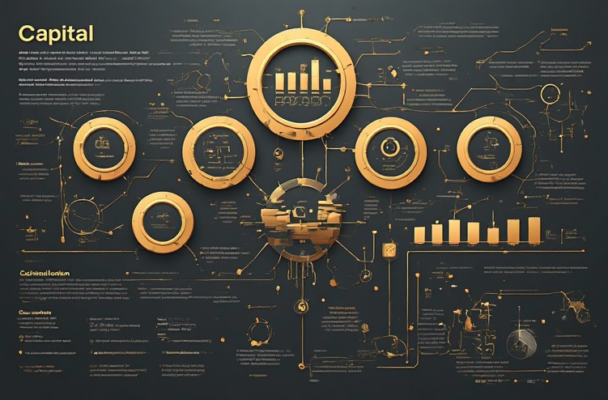
Capital allocation models

8. Capital Allocation Engine: Investment, Returns and Opportunity Cost

The organization treats capital deployment as a constrained resource in an enterprise-wide throughput model, where each investment node is a potential engine contributing to overall system payoff, and the bottlenecks are capital availability, risk tolerance, and regulatory constraints.

Objectives

  • Maximize system-level payoff by prioritizing projects with the highest marginal contribution to throughput relative to capital and risk.
  • Minimize opportunity cost by accounting for foregone returns from alternative deployments when capital is tied to a single venture.

Methodology

  • Model capital as a shared resource with a fixed budget, distributing it across project stages (initiation, development, deployment) to balance inflows and outflows.
  • Score projects using a composite metric: net incremental throughput, risk-adjusted return, and time-to-value, weighted to reflect strategic bottlenecks.
  • Apply dynamic reallocation: reallocate funds as bottlenecks shift, ensuring the engine maintains peak cycle time and minimizes idle capacity.

Decision Rules

  • Fund projects with positive marginal payoff that improve overall engine efficiency, provided they do not exacerbate key bottlenecks.
  • Shut or scale projects whose returns fail to justify capital exposure within the current system constraints.

Outcomes

Aligned with the mandate to convert reporting insights into actionable, system-level capital flows that optimize throughput, reduce latency, and sustain continuous improvement.

9. Risk and Reliability: Failure Modes and Financial Resilience

In finance, failure modes act like bottlenecks in an engine, constraining throughput of capital and amplifying volatility in downstream returns.

Catalog of Failure Modes

  • Liquidity squeeze during market stress reduces trading capacity and increases funding costs.
  • Credit default drift rising default probabilities erode asset quality and capital adequacy.
  • Operational breakdown process failures or cyber incidents disrupt settlement and cashflows.
  • Model risk outdated or miscalibrated assumptions misestimate risk and reserves.
  • Concentration risk overreliance on a narrow counterparty or sector amplifies shocks.
  • Interest-rate misalignment duration gap exposes earnings to rate shifts.
  • Regulatory change sudden rules alter capital requirements or liquidity buffers.

Exposure Estimation

Estimate AR% exposure by mapping each failure mode to potential loss impact, probability, and time-to-peak stress; aggregate through a systems view to identify the overall resilience delta, then prioritize mitigations by expected value and throughput impact.

Mitigation Plan

  • Improve liquidity throughput diversify funding, increase liquid asset buffers, and implement dynamic liquidity forecasting.
  • Strengthen credit hygiene monitor exposure, stress-test portfolios, and diversify credit risk.
  • Enhance operational reliability implement fault-tolerant processes, incident playbooks, and cyber resilience.
  • Sharpen models enforce governance, backtesting, and periodic recalibration.
  • Reduce concentration diversify counterparties and asset sectors to smooth shocks.

Scenario planning strategies

10. Scenario Modeling: Exploring Financial Outcomes

Unleashing the Power of Controlled Experiments

Financial systems, akin to intricate machinery, require rigorous testing to understand their performance boundaries. Scenario modeling is a powerful tool to achieve this, allowing us to:

  • Identify Bottlenecks: By simulating worst-case scenarios, we pinpoint potential constraints in the financial process.
  • Optimize Performance: Through base and best-case experiments, we can fine-tune the system for maximum efficiency.
  • Predict Outcomes: Understanding the impact of changes ensures informed decision-making and strategic planning.

This methodical approach transforms financial analysis into a precise engineering discipline, providing a comprehensive understanding of the financial engine’s capabilities and limitations.

11. Sensitivity and Uncertainty Analysis: Fortifying the Model’s Resilience

In the intricate world of financial modeling, sensitivity analysis is the compass that navigates the impact of input fluctuations on outputs, while uncertainty analysis serves as the protective shield, ensuring the model’s robustness.

Engineering Resilience:

  • Identifying Critical Inputs: Pinpoint the variables with the most significant influence on outcomes, akin to locating the engine’s vital components.
  • Stress Testing: Simulate extreme scenarios to gauge the model’s performance boundaries, much like testing an engine’s resilience under varying loads.
  • Buffer Design: Implement safeguards to mitigate the impact of volatility, akin to installing shock absorbers in a system to ensure smooth operation.

By embracing these engineering principles, we fortify the financial model, ensuring it remains a reliable tool for decision-making, even in the face of dynamic and uncertain market conditions.

12. Governance and Controls: Audit Trails and Compliance

To sustain engine health, implement governance that tightens control surfaces, reduces friction, and preserves throughput across the financial analysis workflow. Establish formal approvals at critical junctures – data acquisition, model selection, scenario inputs, and report release – to steer the system away from bottlenecks and misalignment with policy.

Audit Trails

Capture end-to-end traceability for all data, calculations, and assumptions. Maintain immutable logs detailing who changed what, when, and why, with versioned data sources and model configurations. Ensure each transformation has a contrived fault-detection tag, so deviations trigger automated alarms and reroute the processing toward recomputation rather than propagation of error.

Controls and Approvals

  • Access Control: Role-based permissions limit sensitive operations to authorized engineers and auditors, preventing unauthorized edits that could degrade engine reliability.
  • Change Control: Structured change requests, impact analysis, and sign-offs before deployment minimize risk to throughput and prevent regression in financial assumptions.
  • Segregation of Duties: Separate data stewardship, model development, and approval responsibilities to reduce collusion and errors that impair engine integrity.
  • Compliance Mapping: Align controls with regulatory requirements and internal policies, updating mappings as regulations evolve to sustain engine health.

Together, these governance mechanisms create a transparent, auditable, and resilient system that keeps the financial analysis engine running at peak throughput.

13. Implementation Roadmap: Phased Deployment of the Analysis Engine

The deployment roadmap accelerates throughput by prioritizing quick wins, then progressively integrating deeper modules to eliminate bottlenecks and optimize engine efficiency.

Phase 1: Quick Wins

  • Data Ingestion Stabilization: establish reliable feeds from core financial sources to reduce noise and latency.
  • Baseline Dashboards: deploy essential KPIs (cash flow, gross margin, ROIC) for immediate situational awareness.
  • Audit Trail & Provenance: implement verifiable records to support governance and traceability.

Phase 2: Core Analytics Acceleration

  • Forecasting Engine: integrate time-series models to improve demand and liquidity projections; measure error reduction as a milestone.
  • Scenario Simulator: enable “what-if” analyses to stress test capital allocation and capacity planning.
  • Constraint Identification: surface bottlenecks in cycles, costs, and resource utilization.

Phase 3: Deep Integration

  • End-to-End Workflow Automation: align data, analytics, and actions across modules to accelerate decision cycles.
  • Adaptive Learning: deploy feedback loops to refine models with real-time outcomes; target continuous improvement.
  • Governance & Compliance Module: ensure security, auditability, and policy enforcement across the engine.

Milestones: measurable reductions in decision lead time, forecasting error, and cycle bottlenecks; a staged rollout with explicit go/no-go criteria.

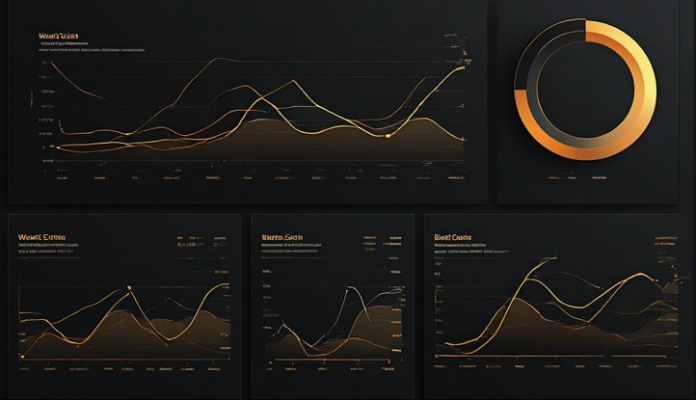
Financial dashboards

14. Performance Monitoring: Dashboards and Real-Time Signals

Design dashboards that act as the engine’s control panel, exposing throughput, bottlenecks, and health indicators in real time to guide engineering decisions.

Core dashboard decisions

  • Throughput visibility: display cycle time, work-in-progress, and completed units per operational segment to reveal capacity utilization and flow efficiency.
  • Bottleneck identification: surface constrained queues, resource contention, and longest lead times with color-coded alerts that trigger maintenance sprints.
  • Throughput gaps: compare actual vs. target outputs, highlighting delta and trend with time-to-action metrics for rapid response.
  • Health and risk signals: monitor error rates, SLA compliance, and anomaly scores to preempt performance degradation.

Real-time signal design

  • Streaming data: ingest telemetry from production lines and services, updating dashboards with minimal latency to reflect current conditions.
  • Contextual drill-down: enable drill paths from high-level throughput anomalies to root-cause dashboards showing resource usage, queue depths, and process steps.
  • Actionable thresholds: implement adaptive triggers that escalate issues to owners and auto-suggest remediation steps.
  • Engineering metaphors: frame metrics as engine health, bottleneck heat maps, and fuel-injection timing to align with systems mindset.

Decision outcomes

  • Prioritized interventions: rank fixes by impact on overall throughput and bottleneck relief.
  • Capacity planning: forecast resource needs under varying demand with confidence intervals.
  • Continuous improvement: tie dashboard insights to improvement sprints and measurable throughput gains.

15. Change Management: Training, Adoption, and Feedback Loops

Plan for people and process changes, embedding continuous improvement into the engine of our organization.

Training and Competency

  • Map required skills to roles, then design targeted training tracks that optimize throughput and minimize bottlenecks.
  • Implement a learning cadence aligned with project cycles to ensure new methods become habitual standards.

Adoption Strategy

  • Establish clear ownership for process changes, with accountability metrics tied to delivery timelines.
  • Incorporate change-ready rituals at sprint boundaries to accelerate implementation and reduce friction.

Feedback and Continuous Improvement

  • Deploy feedback loops that capture performance data, root causes, and improvement proposals; analyze like a diagnostic run to identify bottlenecks.
  • Institutionalize quick experiments (PDSA cycles) to validate changes before full-scale rollout, adjusting the engine as needed.

Governance and Metrics

  • Define acceptance criteria for change milestones and monitor adherence with real-time dashboards.
  • Balance stability and adaptability by calibrating change velocity to system health indicators and customer impact.

⚡ Key Takeaways for Executives

1. Bottlenecks are Opportunities

Every constraint in your financial process is a leverage point. Fix the bottleneck, and throughput increases across the entire system.

2. Cash Flow is Throughput

Measure cash conversion like a production line. DSO, DPO, and working capital cycles are your assembly line speed.

3. Systemize or Stagnate

Ad-hoc analysis creates friction. Treat financial analysis as an engineered system for predictable, repeatable insights.

The goal isn’t better spreadsheets—it’s a faster, more reliable financial engine.

16. Conclusion: Systemization of Financial Analysis as an Asset

The financial analysis framework functions as an integrated engine, converting data inputs into actionable insights that continuously improve throughput and minimize bottlenecks across the organization.

Key gains accrue from standardizing data collection, defining audit trails, and codifying analytical routines, which reduce latency between measurement and decision and enable rapid reallocation of resources where they move the needle most.

Throughput Enhancement

  • Predictable cycles: repeatable processes shorten analysis lead times, accelerating strategic timing and execution.
  • Shared metrics: common dashboards align teams, reducing rework and enhancing cross-functional collaboration.
  • Automated validation: continuous checks catch anomalies early, preserving data integrity and accelerating trust in conclusions.

Bottleneck Reduction

  • Constraint mapping: identifying limiting steps enables targeted investments and process redesign.
  • Modular analyses: decoupled components allow parallel work streams, easing queuing and handoff delays.
  • Feedback loops: rapid learning cycles adjust models and assumptions before misalignment compounds risk.

Collectively, the systemized financial analysis becomes a strategic asset, converting raw numbers into a self-optimizing engine that sustains performance growth.

📚 Continue

Explore related pillars in your strategy execution system:

KPI Management →
Strategic Planning →
Excel Templates →
Performance Management →

Latest on Financial Analysis

Excel Automation for Financial Modeling for Better Accuracy and Efficiency

by

Discover how Excel automation for financial modeling can revolutionize your workflow, ensuring better accuracy and efficiency. Learn expert tips and tools to streamline your financial analysis today.


Categories Excel, Financial Analysis for Executives

Enhancing Google Sheets with AI for Advanced Financial Modeling

by

Discover how to revolutionize your financial modeling with AI-enhanced Google Sheets. Unlock advanced analytics, automation, and precision for smarter decision-making. Perfect for finance professionals and data enthusiasts.

Categories AI for Business, Financial Analysis for Executives, Google Sheets

Building Advanced AI-Enabled Financial Models to Boost Profitability

by

Discover how building advanced AI-enabled financial models can revolutionize your profitability. Learn strategies, tools, and best practices to leverage AI for smarter financial decision-making and sustainable growth.

Categories AI for Business, Financial Analysis for Executives

Monthly Financial Statements for Small Business Owners

by

Unlock financial clarity with our guide to Monthly Financial Statements for Small Business Owners. Learn how to track income, expenses, and cash flow effortlessly to drive growth and profitability.

Categories Financial Analysis for Executives

Google Sheets Automation for Financial Analysis

by

Discover how Google Sheets automation can revolutionize your financial analysis. Streamline workflows, save time, and gain deeper insights with powerful tools and techniques tailored for financial professionals.

Categories Data Analytics, Financial Analysis for Executives, Google Sheets

AI-Driven Financial Analysis: Unlocking Smart Decision-Making

by

Discover how AI-driven financial analysis revolutionizes decision-making with precision, speed, and actionable insights. Unlock smarter strategies for your business today.

Categories AI for Business, Financial Analysis for Executives

Reducing Overhead with ABC Costing and Machine Learning

by

Discover how to slash overhead costs using ABC Costing and Machine Learning. Unlock actionable insights to optimize your business efficiency and boost profitability today.

Categories AI for Business, Financial Analysis for Executives
Older posts
Page1 Page2 … Page24 Next →

⚡ Stop Guessing. Start Executing:

📊 Track Your Key Metrics:

Automated KPI Dashboards →
11,000+
Companies
4.8
★★★★★

🎯 Boost Team Performance:

The 1-3-1 Weekly Framework →
5,000+
Teams
4.9
★★★★★

Trusted by Industry Leaders

Company 1
Company 2
Company 3
Company 4
Company 5
Company 6
Company 7
Company 8
Company 9
Company 10
Company 11
Company 12
Company 13
Company 14
Company 15
Company 16
Company 17
Company 18
Company 19
Company 20
Company 21
Company 22
Company 23
Company 24
Company 25
Company 26
Company 27
Company 28
Company 29
Company 30

Mr Dashboard - Performance Engineering Firm | Strategy Execution • AI Business Transformation • KPI Automation • Financial Engineering • Niche Business Systems


©2006-2026 Mr Dashboard. All Rights Reserved.

We use cookies to ensure your best experience on our website. If you continue using our website, we'll assume you agree to our cookie policy

Limited-time offer

Turn your KPIs into action in 10 minutes a week:

Try 3Moves Free