
Executive Summary
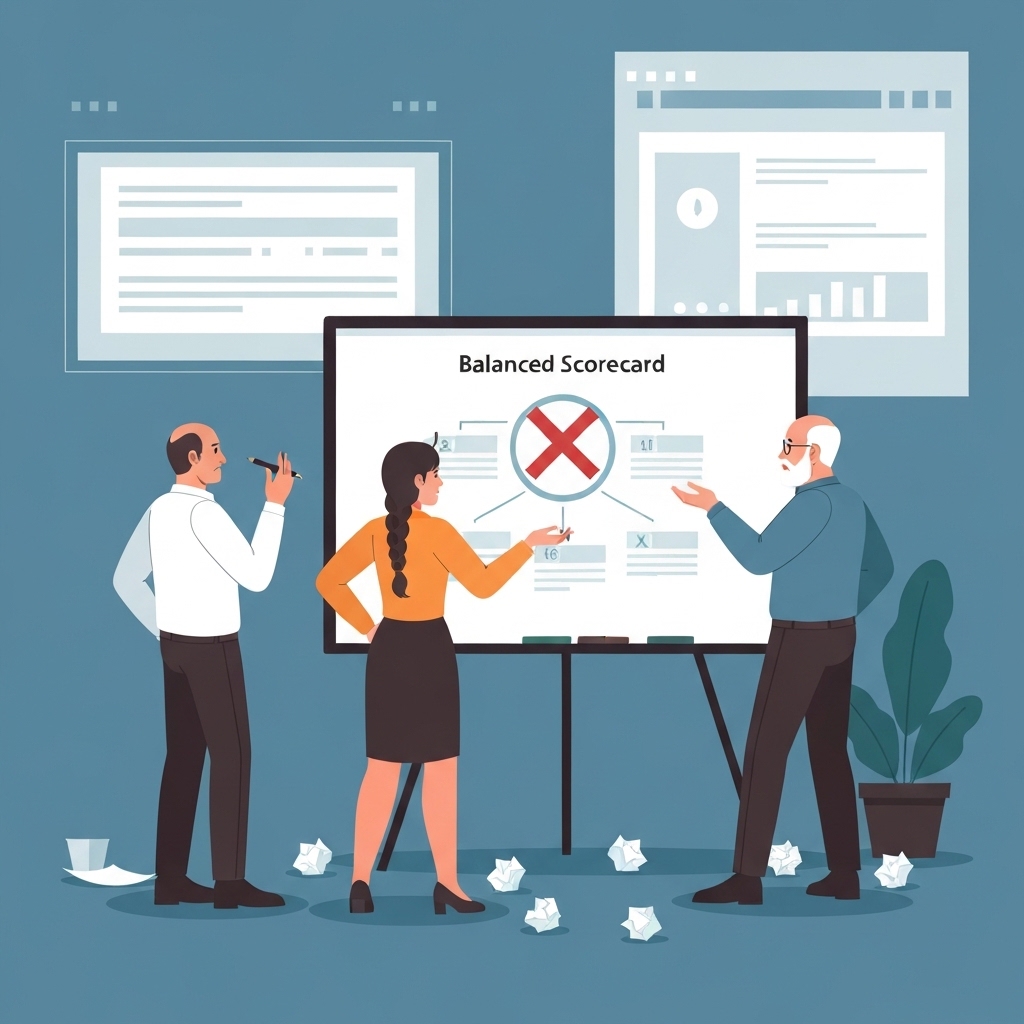
The balanced scorecard framework has transformed corporate strategy for decades, yet 70% of organizations fail to realize its potential. This article reveals why most companies stumble during implementation and provides actionable steps to fix common gaps. Focus on aligning metrics with execution, not just creating pretty dashboards.
The Balanced Scorecard Gap
When Robert Kaplan and David Norton introduced the balanced scorecard in 1992, they created a revolutionary way to connect strategy with execution. Today, 30+ years later, companies still struggle to make this framework work. Research from The Hackett Group shows most organizations treat scorecards as reporting tools rather than strategic levers.
Common symptoms of broken implementations include:
- KPIs that don’t connect to business outcomes
- Quarterly reviews that ignore real-time data
- Strategy maps that collect digital dust
Three Implementation Mistakes Killing Scorecard Success
Metric Myopia
Organizations track 4x more metrics than they act on. Example: A manufacturing company might monitor 150+ KPIs but only take action on 12 critical ones. The solution? Apply the 80/20 rule: Identify 20% of metrics that drive 80% of business impact.
Dashboard Delusion
Shiny interfaces create false confidence. One logistics firm spent $500k on a “real-time” dashboard that only updated weekly. Their operations team kept using spreadsheets because the system didn’t reflect warehouse realities. Build dashboards around user needs, not vendor templates.
Strategy Silos
When marketing tracks customer satisfaction while sales ignores service metrics, organizations create conflicting priorities. A telecom company fixed this by making network reliability a shared KPI across departments, reducing customer churn by 18% in 6 months.
Action Plan: Building Scorecards That Work
Start with Outcomes, Not Metrics
Create a “KPI Chain” connecting every metric to business results:
- What revenue growth do we need? (Outcome)
- Which customer behaviors drive that growth? (Leading indicators)
- What operational capabilities enable those behaviors? (Process metrics)
Build Feedback Loops
One retail chain added “pulse checks” to their scorecard process: 15-minute weekly meetings where store managers could flag metric inconsistencies. This reduced inventory errors by 30% in three months. Your system should surface problems before quarterly reviews.
Make It Visual, Not Theoretical
A healthcare provider replaced abstract strategy maps with patient journey timelines. Nurses could immediately see how handwashing compliance (a tracked metric) reduced infection rates (a business outcome). Visual storytelling increases scorecard adoption by 40% according to McKinsey research.
Important Facts to Remember
- Organizations that align scorecards with execution see 2x faster strategy execution
- Real-time dashboards only deliver value when paired with clear accountability
- Top-performing companies update their scorecard frameworks annually
What’s Next for Your Scorecard?
Fixing broken implementations requires more than technical adjustments. Start by auditing your current scorecard system through three lenses:
- Connection: Does every metric trace back to business outcomes?
- Relevance: Are front-line teams using these metrics daily?
- Adaptability: Can you update the framework without rebuilding everything?
Download a free scorecard health checklist at the bottom of this page. Rate your organization across 10 critical dimensions to identify quick wins and strategic gaps.
Takeaways
Most scorecard failures stem from treating strategy as a static document rather than a living system. The 30% of companies that succeed do three things differently:
- They treat metrics as hypotheses to test, not facts to display
- They build feedback channels from execution teams to strategy owners
- They measure scorecard success by business outcomes, not implementation timelines
Here’s the one thing you should do today: Pick one underperforming KPI and trace its connection to business value. Ask: “If we improve this metric, which customer or financial outcome will change?” If you can’t answer clearly, that’s your starting point.