Discover the top finance and operations cash flow models to optimize your business’s financial health. Learn how these models can streamline operations, improve liquidity, and drive sustainable growth.
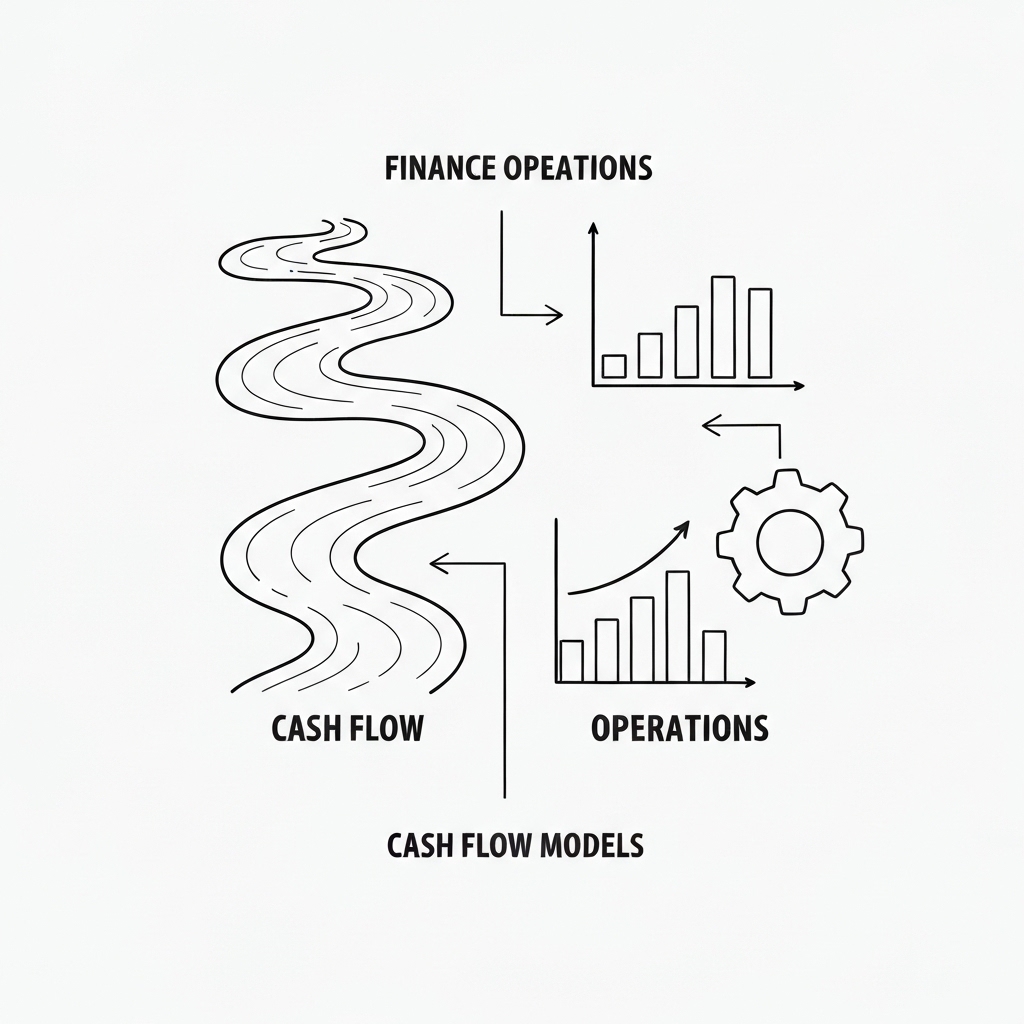
Cash flow is the lifeblood of any business. Without a steady and predictable flow of cash, even the most profitable companies can struggle to meet obligations, invest in growth, or weather unexpected challenges. To ensure financial stability and operational efficiency, businesses rely on robust cash flow models. These models not only help in forecasting cash movements but also provide actionable insights to optimize liquidity, reduce costs, and drive sustainable growth.
In this article, we’ll explore the top finance and operations cash flow models that every business leader should know. Whether you’re a startup founder, a CFO, or an operations manager, these models will empower you to make data-driven decisions and improve your organization’s financial health.
1. The Direct Cash Flow Model
The Direct Cash Flow Model is a straightforward approach to tracking cash inflows and outflows. It focuses on actual cash transactions rather than accrual accounting, making it ideal for small businesses or those with simple financial structures.
How It Works:
- Inflows: Include revenue from sales, interest, and investments.
- Outflows: Cover expenses like payroll, supplier payments, and operational costs.
- Net Cash Flow: Calculated as Inflows – Outflows.
Benefits:
- Provides a clear, real-time view of cash availability.
- Simple to implement and understand.
- Helps identify immediate liquidity issues.
Best For: Small businesses, startups, or companies with limited financial complexity.
2. The Indirect Cash Flow Model
The Indirect Cash Flow Model starts with net income and adjusts for non-cash items and changes in working capital. It’s commonly used in financial reporting and is particularly useful for larger businesses with complex operations.
How It Works:
- Begin with net income from the income statement.
- Add back non-cash expenses (e.g., depreciation, amortization).
- Adjust for changes in working capital (e.g., accounts receivable, inventory, accounts payable).
Benefits:
- Aligns with GAAP and IFRS reporting standards.
- Highlights the relationship between net income and cash flow.
- Provides insights into operational efficiency.
Best For: Larger enterprises, publicly traded companies, or businesses with complex financial structures.
3. The 13-Week Cash Flow Model
The 13-Week Cash Flow Model is a short-term forecasting tool that breaks down cash inflows and outflows on a weekly basis for the next quarter. It’s widely used by businesses facing liquidity challenges or those in high-growth phases.
How It Works:
- Project weekly cash receipts (e.g., customer payments, investments).
- Estimate weekly cash disbursements (e.g., payroll, supplier payments).
- Calculate the ending cash balance for each week.
Benefits:
- Enhances short-term liquidity management.
- Identifies potential cash shortfalls in advance.
- Supports strategic decision-making during critical periods.
Best For: Businesses in turnaround situations, high-growth companies, or those with seasonal cash flow fluctuations.
4. The Discounted Cash Flow (DCF) Model
The Discounted Cash Flow (DCF) Model is a valuation method that estimates the present value of a company’s future cash flows. It’s a cornerstone of financial analysis and is used to assess investment opportunities or business valuations.
How It Works:
- Forecast future cash flows over a specific period.
- Discount these cash flows to their present value using a discount rate (e.g., weighted average cost of capital).
- Sum the present values to determine the company’s intrinsic value.
Benefits:
- Provides a long-term perspective on business value.
- Helps evaluate investment decisions and M&A opportunities.
- Incorporates the time value of money.
Best For: Investors, financial analysts, and businesses considering acquisitions or expansions.
5. The Cash Conversion Cycle (CCC) Model
The Cash Conversion Cycle (CCC) Model measures the time it takes for a business to convert investments in inventory and other resources into cash flows from sales. It’s a critical metric for optimizing working capital and operational efficiency.
How It Works:
- Days Inventory Outstanding (DIO): Average time to sell inventory.
- Days Sales Outstanding (DSO): Average time to collect receivables.
- Days Payable Outstanding (DPO): Average time to pay suppliers.
- CCC = DIO + DSO – DPO.
Benefits:
- Identifies bottlenecks in the operating cycle.
- Highlights opportunities to improve cash flow.
- Enhances working capital management.
Best For: Manufacturing, retail, or distribution businesses with significant inventory and receivables.
6. The Zero-Based Cash Flow Model
The Zero-Based Cash Flow Model is a budgeting approach that requires justifying every expense from scratch rather than basing it on previous periods. It’s particularly effective for cost optimization and resource allocation.
How It Works:
- Start with a zero budget.
- Justify each expense based on its contribution to business goals.
- Allocate resources only to high-impact activities.
Benefits:
- Eliminates unnecessary spending.
- Encourages strategic resource allocation.
- Promotes a culture of accountability.
Best For: Companies undergoing cost-cutting initiatives or those seeking to improve operational efficiency.
7. The Monte Carlo Cash Flow Simulation
The Monte Carlo Cash Flow Simulation is a probabilistic model that uses random sampling to forecast cash flows under various scenarios. It’s ideal for businesses operating in uncertain or volatile environments.
How It Works:
- Define key variables (e.g., sales, expenses, interest rates).
- Assign probability distributions to these variables.
- Run simulations to generate a range of possible cash flow outcomes.
Benefits:
- Accounts for uncertainty and risk.
- Provides a range of possible outcomes rather than a single forecast.
- Supports robust decision-making in volatile conditions.
Best For: Businesses in unpredictable industries, such as technology, energy, or healthcare.
How to Choose the Right Cash Flow Model for Your Business
Selecting the right cash flow model depends on your business size, industry, and specific needs. Here’s a quick guide:
- Small Businesses: Start with the Direct Cash Flow Model for simplicity.
- Large Enterprises: Use the Indirect Cash Flow Model for compliance and complexity.
- Liquidity Management: Implement the 13-Week Cash Flow Model.
- Valuation and Investment: Leverage the DCF Model.
- Operational Efficiency: Focus on the CCC Model.
- Cost Optimization: Adopt the Zero-Based Cash Flow Model.
- Risk Management: Employ the Monte Carlo Simulation.
Implementing Cash Flow Models: Best Practices
- Use Reliable Data: Ensure your inputs are accurate and up-to-date.
- Regularly Update Forecasts: Cash flow dynamics change, so revisit your models frequently.
- Integrate with ERP Systems: Automate data collection for efficiency and accuracy.
- Train Your Team: Ensure key stakeholders understand the models and their implications.
- Monitor Key Metrics: Track KPIs like net cash flow, CCC, and liquidity ratios.
Conclusion
Cash flow models are indispensable tools for managing finances and operations effectively. By understanding and implementing the top finance and operations cash flow models, businesses can optimize liquidity, reduce costs, and drive sustainable growth. Whether you’re forecasting short-term cash needs or valuing long-term investments, these models provide the insights needed to make informed decisions.
Start by assessing your business’s unique needs and selecting the model(s) that align with your goals. With the right approach, you can transform your cash flow management from a reactive task into a strategic advantage.