
The Top 5 Operational Supply Chain KPIs for Maximum Efficiency
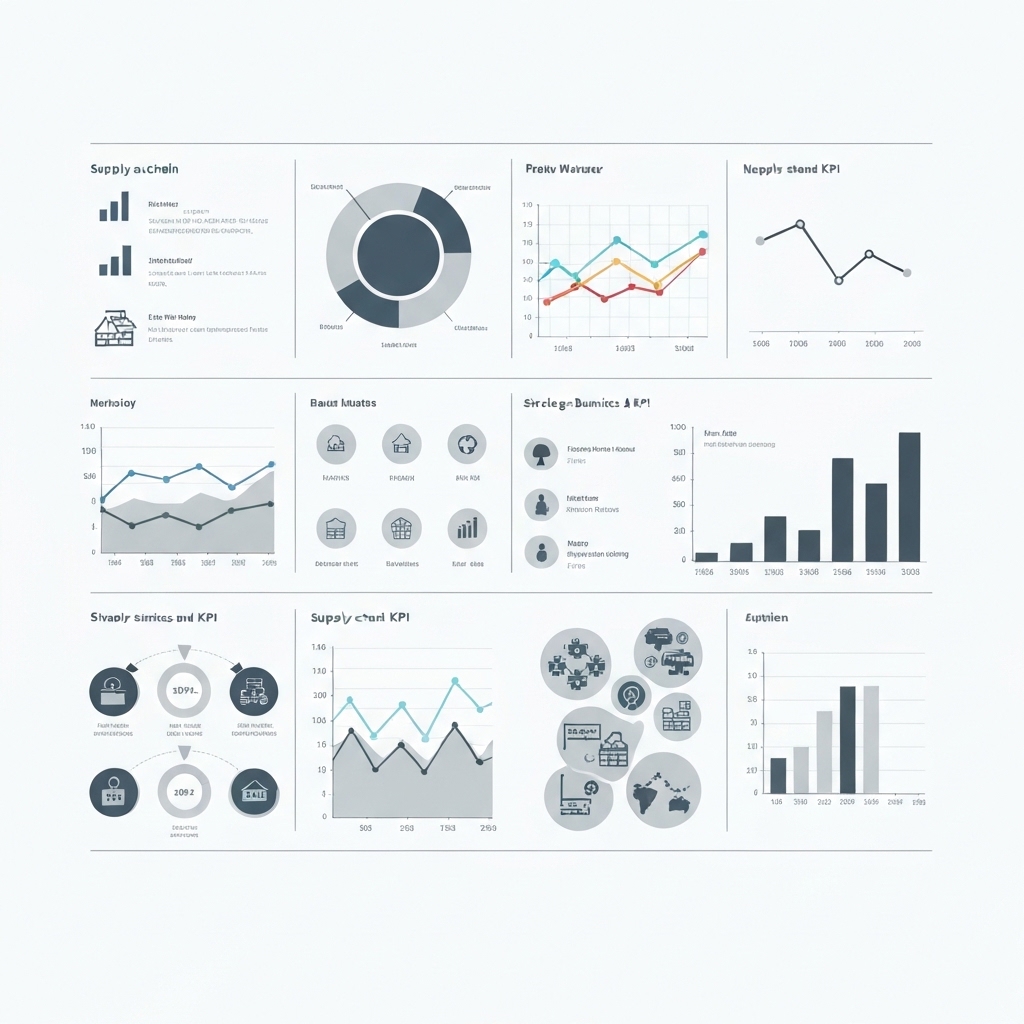
Track these top 5 operational supply chain KPIs to boost efficiency. They focus on daily operations. Use them to spot bottlenecks fast and cut waste.
1. On-Time Delivery Rate
Measure how often you deliver orders on time. Calculate it as (number of on-time deliveries / total deliveries) x 100. Aim for 95% or higher.
Check this weekly. If it dips below 90%, review carrier performance. Switch to reliable partners. Train your team on accurate promise dates.
Action step: Set up alerts in your ERP system. When rate falls, pull carrier scorecards. Review top issues like traffic delays or customs holds.
- Track by carrier to find weak links.
- Share scores with suppliers for joint fixes.
- Link to bonuses for warehouse teams hitting targets.
This KPI ties directly to customer trust. Higher rates mean repeat business.
2. Inventory Turnover Ratio
Figure this as cost of goods sold / average inventory value. Target 6-8 turns per year for most industries.
Low turnover signals overstock. High turnover risks stockouts. Review monthly by product category.
To improve: Run ABC analysis. Focus safety stock on high-value A items. Use demand forecasting tools for better buys.
Quick win: Negotiate faster payment terms with suppliers. This frees cash without slowing turns.
- Segment inventory: Fast movers get priority space.
- Slow movers: Discount or return to vendors.
- Automate reorder points based on lead times.
Better turns cut holding costs by 20-30%.
3. Order Cycle Time
Time from order receipt to customer delivery. Break it into order processing, picking, packing, and shipping.
Benchmark: Under 48 hours for e-commerce. Track each step to find delays.
Shorten it by automating order entry. Use barcode scanners for picking. Batch similar orders for routes.
Test this: Time a sample of 50 orders. Identify the longest step. Fix it first—like upgrading packing stations.
- Reduce processing: Integrate EDI with customers.
- Cut picking: Optimize warehouse layout by velocity.
- Speed shipping: Partner with express carriers for urgent.
Halve cycle time, and watch customer satisfaction climb.
4. Perfect Order Rate
Percentage of orders delivered complete, on-time, damage-free, with correct docs. Formula: (perfect orders / total orders) x 100.
Target 98%. Misses hurt reputation and returns.
Improve by auditing 10% of outbound orders daily. Fix root causes like wrong picking or bad labeling.
Build checklists for packers. Train on them weekly. Use quality gates before shipping.
- Complete: Verify quantities twice.
- Damage-free: Right packaging per item type.
- Correct docs: Auto-generate invoices.
- On-time: Buffer for peak seasons.
This one KPI predicts profitability per order.
5. Fill Rate
Orders shipped complete on first try. (Lines shipped complete / lines ordered) x 100. Aim for 96%+.
Low fill rate means lost sales and backorders. Track by SKU and supplier.
Fix it: Set min-max levels per item. Forecast with sales data. Communicate stockouts to sales early.
Pro tip: For top 20% of SKUs by volume, hold extra buffer stock. Review supplier lead times quarterly.
- Monitor daily for fast movers.
- Auto-alert when stock hits reorder point.
- Cross-train buyers on backup suppliers.
Higher fill rates boost revenue without extra marketing spend.
Implement these five now. Start with dashboards in Excel or your ERP. Review in team huddles weekly. Watch efficiency soar as teams align on what matters.
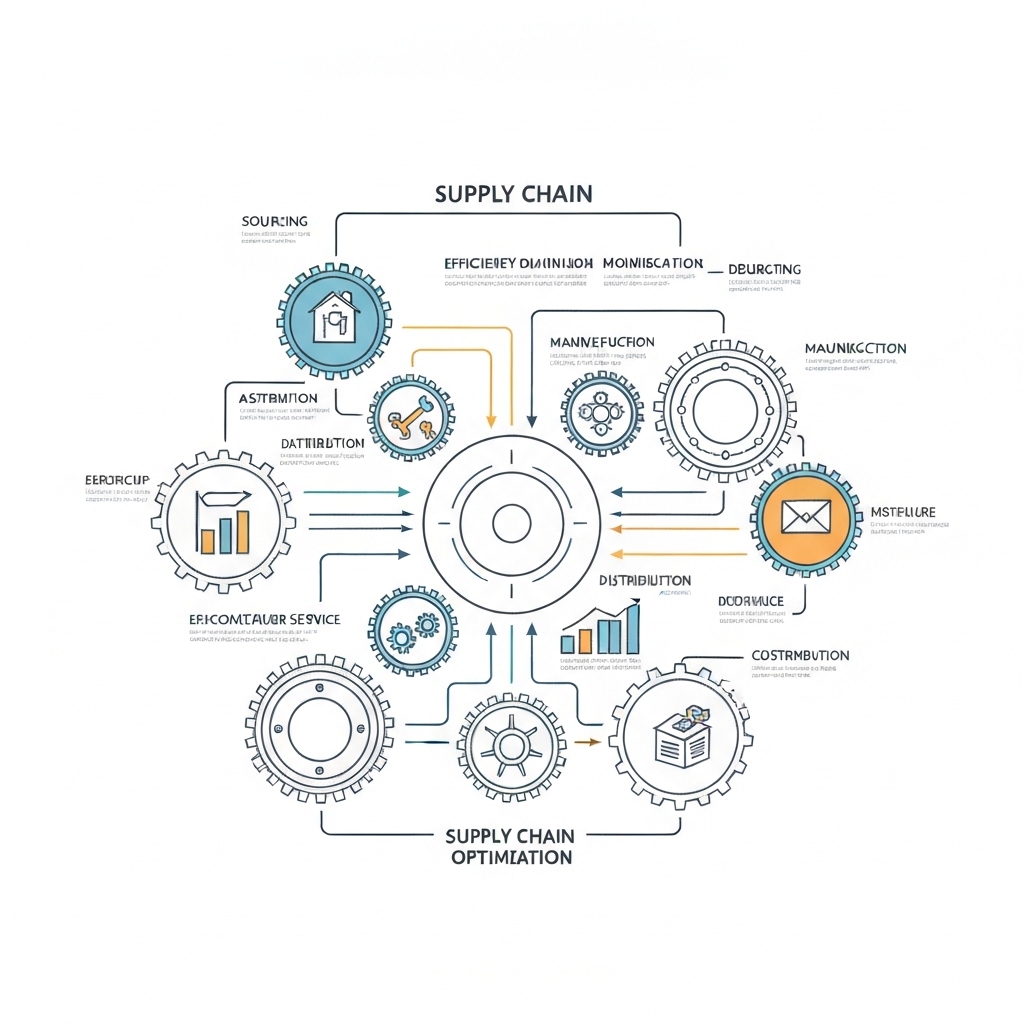
The Top 5 Financial Supply Chain KPIs to Optimize Costs and Profits
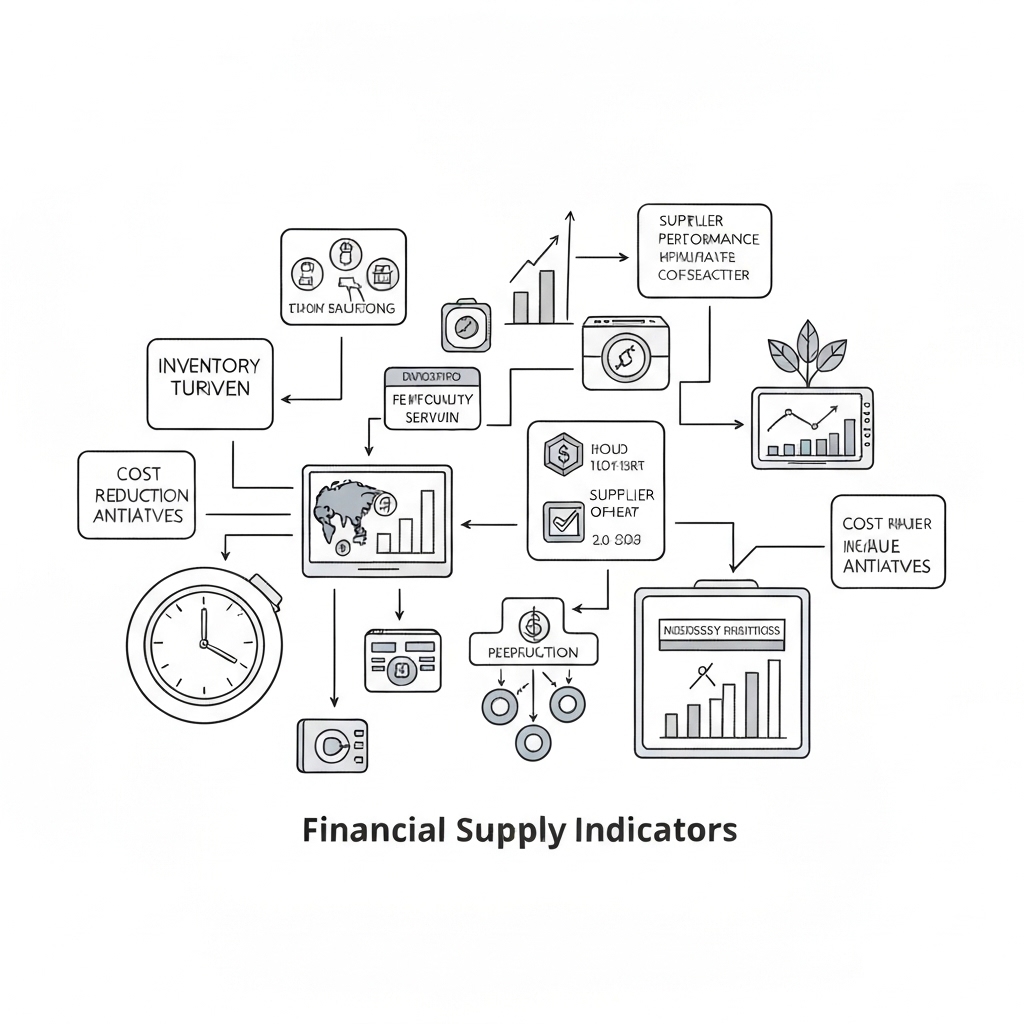
The Top 5 Financial Supply Chain KPIs to Optimize Costs and Profits
1. Cash Conversion Cycle (CCC)
Track how quickly your business turns inventory into cash. CCC = days inventory outstanding + days sales outstanding – days payable outstanding. Shorten it by speeding up collections, reducing inventory, or negotiating longer payment terms. Action steps: implement faster invoicing, offer early-pay discounts strategically, and adopt just-in-time inventory practices where feasible to cut carrying costs.
2. Cost-to-Serve (CTS)
CTS measures the total cost to fulfill a customer order or product line. It reveals high-cost customers, channels, or SKUs. Break CTS into process steps (procurement, production, logistics, service) to pinpoint bottlenecks. Use CTS to decide pricing, place bets on profitable products, or retire underperformers. Action steps: map end-to-end costs, compare by channel, and align pricing with true fulfillment costs.
3. Gross Margin Return on Inventory Invested (GMROII)
This KPI shows the gross margin dollars earned per dollar tied up in inventory. GMROII = gross margin / average inventory cost. A higher GMROII means you’re getting more profit from your stock. Improve it by reducing slow-moving stock and increasing turnover of high-margin items. Action steps: set target turns by product family, implement rotation rules, and rebalance assortments quarterly.
4. Freight and Logistics Cost as a Percentage of Revenue
Measure how much freight and logistics eat into sales. A rising percentage signals inefficiency or misaligned network design. Cut costs with route optimization, mode-shift analysis, and consolidating shipments. Action steps: run regular network simulations, negotiate carrier terms, and invest in visibility tech to avoid lost or delayed loads.
5. Days Payable Outstanding (DPO) and Supplier Cash Flow
DPO tracks how long you wait to pay suppliers. Pair DPO with supplier cash flow to ensure strong partnerships while preserving working capital. Don’t stretch terms so far peers push back or suppliers tighten terms. Action steps: review payment terms with key suppliers, leverage early-pay programs where discounts exceed financing cost, and maintain relationship health to prevent supply risks.
Practical integration tips
- Link metrics to a single owner in finance and operations to ensure accountability.
- Set clear quarterly targets and track progress with dashboards that update in real time.
- Use scenario planning to test how changes in one KPI affect others, like CTS or CCC.
- Standardize data definitions across systems to avoid miscounts and misinterpretation.
- Embed these KPIs into decision meetings so cost and profit implications drive choices, not just volume.
Implementation checklist
- Map end-to-end processes for CTS and GMROII analysis.
- Audit data accuracy for inventory, sales, and payable data.
- Choose a single source of truth for KPI reporting.
- Develop quick wins: adjust pricing, trim slow movers, and renegotiate key terms.
- Plan a 90-day review cadence to refine targets and actions.
Common pitfalls to avoid
- Overloading dashboards with too many metrics; focus on the five above plus a leading indicator.
- Ignoring data latency; ensure timely data feeds for credible insights.
- Treating cost reductions as isolated wins; pursue cross-functional improvements for lasting impact.
By focusing on these five financial supply chain KPIs, you gain a practical lens to cut costs and lift profits. Tie each KPI to specific, actionable steps and owners, and you’ll turn numbers into disciplined, fast-moving improvements.
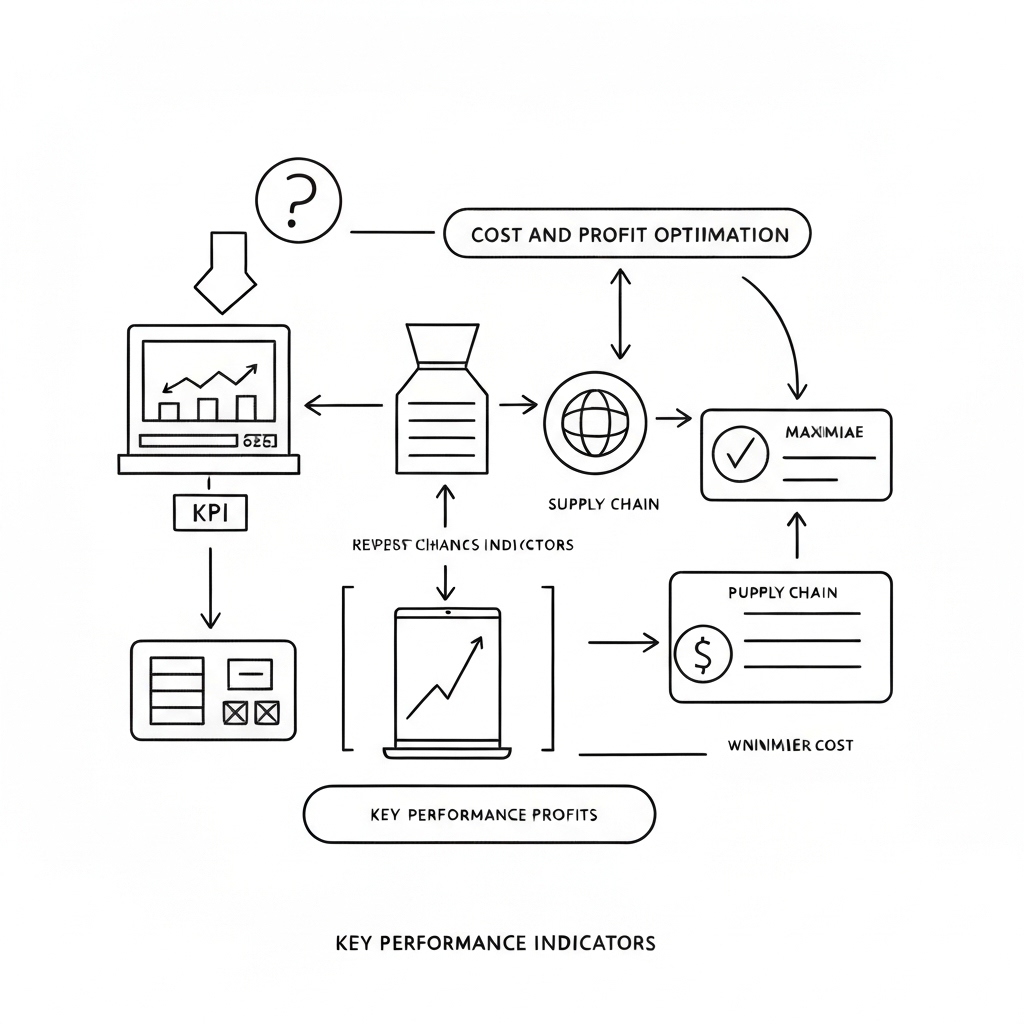
The Top 5 Strategic Supply Chain KPIs for Resilience and Competitive Advantage
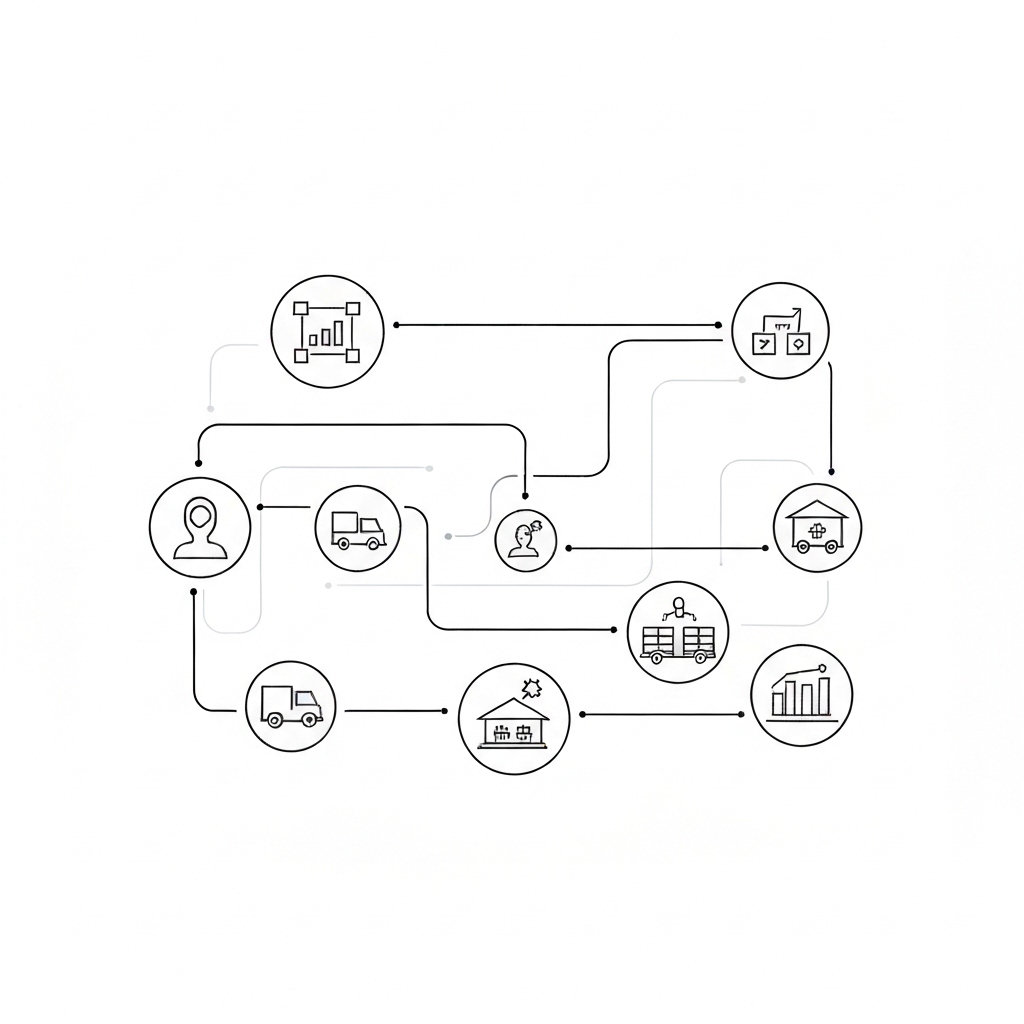
The Top 5 Strategic Supply Chain KPIs for Resilience and Competitive Advantage focus on selecting metrics that illuminate risk, capability, and value delivery. Use these as a tight cockpit of measurements that align with your company strategy and execution rhythm.
1. Cash-to-Cash Cycle Time
Definition: The time span from paying cash for raw materials to collecting cash from the sale of the finished product. Why it matters: Shorter cycles free up capital for investment and reduce exposure to supplier price shocks. How to act:
- Map end-to-end flow from supplier PO to customer payment and identify bottlenecks.
- Improve supplier collaboration to shorten lead times and reduce batch sizes where feasible.
- Use dynamic safety stock for high variability items to avoid excess inventory and cash drag.
- Leverage payment terms optimization without harming supplier relationships.
2. Supply Chain Risk Index
Definition: A composite score that tracks exposure to demand, supply, and operational risks across suppliers, geographies, and critical materials. Why it matters: It makes risk visible before it disrupts your operations. How to act:
- Identify top 10% of suppliers by value and risk; run quarterly scenario drills (price spike, port closure, labor strikes).
- Diversify critical supplier bases and pre-qualify backups with ready-to-activate contracts.
- Monitor external signals (weather, tariffs, regulatory changes) and trigger contingency plans early.
- Invest in digital supplier risk signals (vendor financial health, on-time delivery trends, capacity constraints).
3. On-Time In-Full (OTIF) with Strategic Focus
Definition: The percentage of orders delivered on time and complete, tied to strategic product families or customer segments. Why it matters: OTIF directly links to customer satisfaction and revenue predictability. How to act:
- Segment OTIF by high-value customers and strategic product lines to prioritize actions.
- Root-cause rapid fixes: supplier late deliveries, capacity crunch, or warehouse mis-picks.
- Inject agility: maintain optional dual-sourcing for critical SKUs and pre-stage safety stock for key customers.
- Pair OTIF improvements with clear communication to customers about delivery windows and status updates.
4. Perfect Order Rate with Value Realization
Definition: The share of orders delivered complete, accurate, on time, and with correct documentation. Why it matters: It reduces post-sale costs and accelerates customer trust, driving repeat business. How to act:
- Hold a “zero defects” review after each shipment cycle; track root causes across suppliers, fulfillment, and logistics.
- Automate order checks at each handoff (ERP to WMS to TMS) to catch errors early.
- Standardize packaging, labeling, and documentation for all strategic lines to minimize rework.
- Link improvements to a value scorecard showing savings from fewer returns and faster revenue realization.
5. Supply Chain Value Realization (SCR) Index
Definition: A forward-looking KPI that measures how well supply chain initiatives translate into margin, growth, and strategic advantages. Why it matters: It connects ops to business outcomes, ensuring projects deliver real returns. How to act:
- Choose 3–5 strategic initiatives (e.g., supplier digitalization, network optimization, inventory reduction) with clear cost-to-serve targets.
- Track benefits in quarters: cost savings, service level lift, and revenue impact from faster time-to-market.
- Allocate a formal benefit realization plan with owners, milestones, and pause criteria if benefits stall.
- Publish a simple dashboard for executives that shows progress against strategic goals and linked financial impact.
Implementation tips
– Start with a 90-day sprint to define data sources, owners, and baselines for these five KPIs.
– Normalize data across ERP, WMS, and TMS to avoid misinterpretation due to silos.
– Tie KPIs to a simple action calendar: who shifts capacity, who renegotiates terms, who updates customers.
– Use visual dashboards with drill-downs by region, customer segment, and product family to keep focus sharp.