
Understanding the Foundations of Supply Chain Strategy: Key Concepts and Modern Challenges
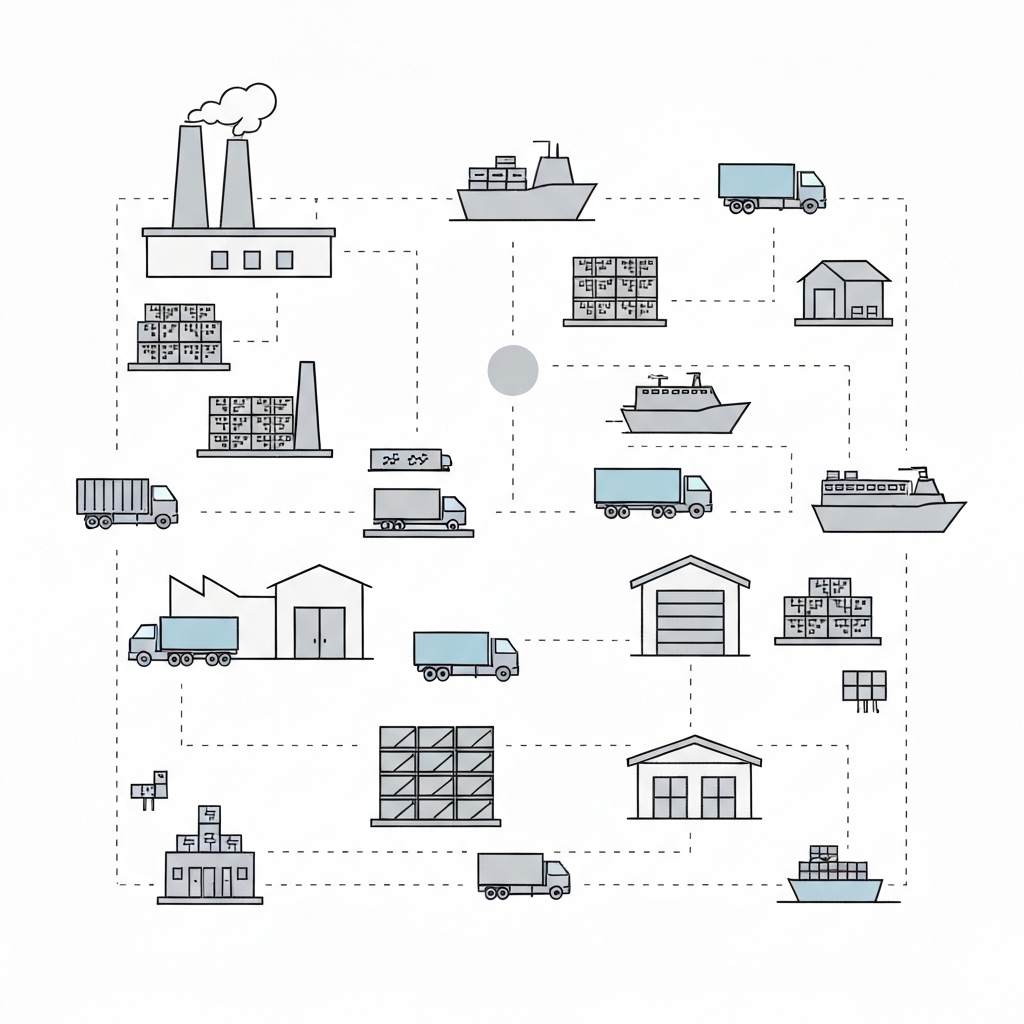
Understanding the Foundations of Supply Chain Strategy is about clarifying how your end‑to‑end operations align with business goals.
It starts with a clear purpose: what customer value are you buffering and which steps turn inputs into that value most efficiently?
This section lays out the core concepts and the modern hurdles you will face, plus practical moves you can implement now.
Core concepts to anchor your strategy
- Value-driven mapping: Identify the single most important value promise to customers (speed, cost, customization, reliability). Map how every link in the chain supports that promise, then prune activities that don’t add value.
- End‑to‑end visibility: Build real‑time data flow from suppliers to customers. Visibility reduces delays and reveals bottlenecks before they explode into cost and service issues.
- Network design with intent: Your supplier and distribution footprints should match demand patterns, not just geography. Use scenario planning to test how changes in demand, tariffs, or lead times ripple through the network.
- Inventory as a decision variable: Treat inventory not just as stock, but as a strategic policy. Different products, channels, and regions deserve different inventory positions and safety stock levels.
- Risk as a design constraint: Build resilience into process design, supplier diversification, and rapid recovery playbooks. Resilience is a property of the system, not a single fix.
Modern challenges you must address
- Volatility and demand shaping: Sudden shifts in demand break plans. Use continuous forecasting and scenario drills to stay ahead of changes rather than chasing them after they occur.
- Data quality and interoperability: Data silos slow you down. Standardize data models across procurement, production, logistics, and sales to enable instant quick‑wins in decision making.
- Supplier risk and dependency: Over‑reliance on a few suppliers creates blind spots. Build alternate sourcing, dual sourcing, and local options where feasible to reduce exposure.
- Technology integration: The stack should talk to itself. Prioritize platforms with open APIs, modular updates, and a clear data lineage to avoid brittle integrations.
- Cost versus service tradeoffs: In crisis, service often wins. Define service targets that are realistic, measurable, and aligned with customer expectations to avoid over‑engineering for unlikely events.
Practical framework for a resilient baseline
- Define the value chain boundary: Map the full flow from supplier inbound to customer outbound. Note where value is created and where it’s delivered to the customer. Remove non‑essential steps.
- Set four to six strategic KPIs: Examples: fill rate, on‑time delivery, forecast accuracy, total landed cost, supply risk index, and inventory turnover. Tie each KPI to a business outcome you can influence.
- Design for alternating modes: Create a plan for each mode of operation (normal, stressed, and recovery). Include who decides, what triggers a mode switch, and how data supports the switch.
- Build a lightweight digital spine: A shared data layer with real‑time dashboards. Focus on accuracy, timeliness, and accessible anomalies so leaders see the same picture at once.
- Establish supplier alternates and contingency playbooks: Pre‑approve backup suppliers, dual‑sourcing where possible, and clear escalation paths. Practice the handoffs in quarterly drills.
- Invest in demand shaping tools: Use pricing, promotions, and product availability signals to influence demand in the most strategic way, smoothing volatility at the source.
Capabilities that drive practical benefits
- Scenario planning: Run what‑if analyses for supply shocks, tariff changes, or capacity limits. The goal is decision speed, not perfect prediction.
- Collaborative planning with suppliers: Share near‑real‑time demand signals and capacity constraints. Transparent planning reduces last‑minute rushes and cost leakage.
- Agile fulfillment models: Use multi‑channel fulfillment, cross‑docking, or local last‑mile hubs to meet service goals without bloating inventory.
- Resilience testing: Periodically stress test the network with small, controlled disruptions to learn and improve the recovery playbook.
- Data governance discipline: Define data ownership, lineage, and quality rules. A clean data foundation makes every KPI trustworthy and actions repeatable.
How to start today
- Trace its supply chain from supplier to customer. Identify one bottleneck you can fix in 30 days and measure the impact on service and cost.
- A one‑page map that shows critical handoffs, ownership, and decision rights. Use it in your next leadership meeting to align priorities.
- Contract a vetted alternative and run a joint forecast. Track service levels, cost delta, and time to switch.
- Launch a shared KPI dashboard: Tie metrics to the business outcome and publish a weekly digest to leadership. Make the data a common language.
- Institute a quarterly resilience drill: Simulate a disruption, test your recovery steps, and capture learnings for the next cycle.
Measure what truly matters
Choose metrics that directly reflect value delivered to customers. Favor leading indicators that you can influence in real time over lagging metrics that arrive after the fact. Pair supply chain metrics with business outcomes to avoid optimizing a process in a vacuum.
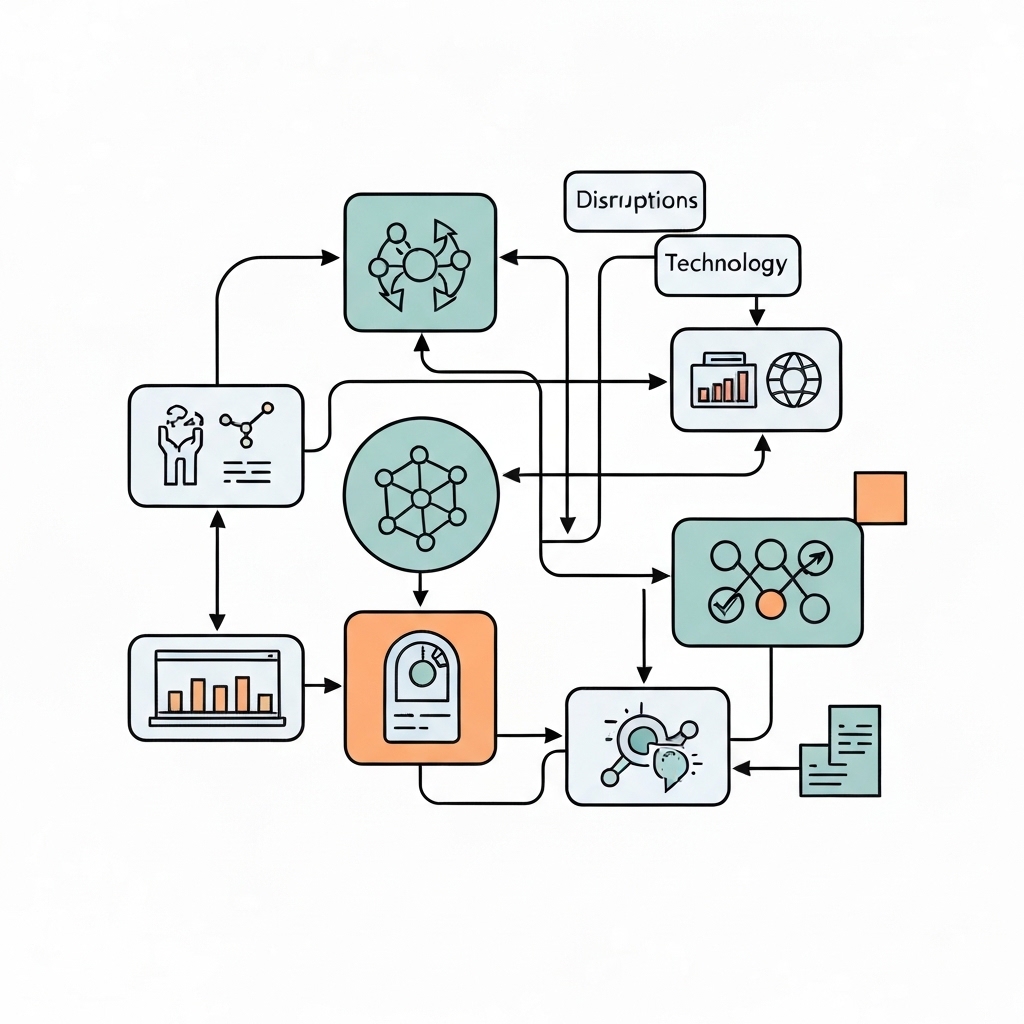
Leveraging Data and Technology to Build Resilient and Adaptive Supply Chains
Data and technology are not just tools—they are the backbone of a supply chain that can bend without breaking. To build resilience, you need a clear way to collect, connect, and act on data across functions and partners. Start with a practical framework and then scale it with the right tech.
Align data goals with business outcomes
Define the decision questions that drive value: where to buffer inventory, how to reroute when a disruption hits, and when to adjust sourcing. Map data sources to these questions and set measurable targets—cycle times, forecast accuracy, and service levels. Keep the scope tight to avoid data overload and to ensure leadership buys in.
Establish a single source of truth
Create an integrated data platform that combines demand, supply, logistics, and financial data. Use standardized data definitions and governance to ensure consistency across teams. A reliable data backbone reduces misaligned actions and speeds decision cycles.
Automate real-time visibility
Move beyond daily reports. Implement dashboards that refresh in near real time and trigger alerts for exceptions. Focus on critical KPIs like on-time delivery, fill rate, and inventory turnover. Real-time visibility enables proactive responses rather than reactive firefighting.
Leverage predictive analytics
Use historical data to forecast demand, supplier risk, and capacity constraints. Apply scenario planning to quantify the impact of disruptions—weather, port congestion, or supplier failure. The goal is to anticipate, not just react, so you can choose the best countermeasure before it’s too late.
- Demand sensing: shorten forecast horizons to improve accuracy in volatile markets.
- Supplier risk scoring: score suppliers on financial health, geography, and diversification.
- Dynamic safety stock: adjust buffers based on variability and lead times.
Adopt event-driven architectures
Design processes that respond to events, not static schedules. When inventory crosses a threshold or a carrier delays, automated workflows trigger appropriate actions—reallocate, re-order, or reroute. Event-driven systems reduce latency and improve agility.
Implement digital twins for resilience planning
Create a virtual model of your end-to-end network. Simulate disruptions, test recovery options, and compare outcomes. A digital twin helps you see the ripple effects of changes before you commit to them in the real world.
Standardize data quality procedures
Establish data quality rules and automated checks. Track completeness, accuracy, and timeliness. Regular data cleansing keeps dashboards trustworthy and decisions sound.
Utilize prescriptive analytics for actionability
Turn insights into concrete steps. Prescriptive analytics suggest what to do, when, and with which resources. Pair it with guardrails so recommended actions stay aligned with policy and risk appetite.
Drive cross-functional data literacy
Offer quick training focused on decision-making with data. Equip leaders to interpret dashboards, run simple analyses, and challenge assumptions. A data-lue mindset accelerates adoption and reduces bottlenecks.
Engineer supplier and logistics data sharing
Partner data sharing must be secure and purposeful. Define what is shared, how it’s protected, and how often. Transparent exchange improves coordination and reduces delays caused by information gaps.
Prioritize interoperability and standards
Choose platforms with open APIs and common data models. Interoperability lets you plug new tools quickly and keeps your stack lean. Standards minimize custom integrations that drift over time.
Design for continuous improvement
Build a cadence of review cycles: quarterly checks on data quality, tool effectiveness, and process alignment. Use small, rapid experiments to test changes and scale the winners.
Example: a practical playbook in 6 steps
- Step 1: Define 3 actionable decisions your leadership wants to optimize.
- Step 2: Map data sources to those decisions and ensure a single source of truth.
- Step 3: Deploy near real-time dashboards with automated alerts on top KPIs.
- Step 4: Introduce a digital twin to test disruption scenarios.
- Step 5: Implement prescriptive analytics to generate recommended actions.
- Step 6: Create a 6-week pilot to validate value before scaling.
Common pitfalls to avoid
- Overloading dashboards with every metric—focus on what drives decisions.
- Rigid architectures that can’t adapt to new data sources.
- Data gaps that undermine trust—prioritize quality over quantity.
Outcome you can expect
With data and technology aligned to business goals, you gain faster recovery from shocks, better service levels, and lower total cost of ownership. You’ll turn your supply chain from a cost center into a strategic advantage.

Implementing End-to-End Optimization and Continuous Improvement for Long-Term Success
Implementing end-to-end optimization and continuous improvement sets the stage for durable, data-driven success. It starts with a clear, actionable framework that ties plan, source, make, and deliver to measurable outcomes and ongoing learning.
Align vision with end-to-end processes
Map the supply chain from customer order to final delivery. Identify handoffs, data touchpoints, and who owns each step. Create a simple dashboard that tracks cycle time, on-time delivery, and forecast accuracy across the full chain. Use this single source of truth to align teams and avoid optimization in one silo while others lag.
Establish a data-driven cadence
Pick 3–5 core KPIs that reflect end-to-end health: demand forecast accuracy, production schedule adherence, inventory turns, supplier lead time, and logistics reliability. Use a daily or weekly pulse to detect deltas early. Automate data collection where possible and validate data quality with simple checks—missing values, outliers, and timing mismatches.
Implement continuous improvement rituals
Institute regular, fast improvement cycles. Run a weekly 60-minute review focused on one end-to-end constraint. Use a simple 5-Why approach to uncover root causes, then assign owner and a 2-week experiment. Measure impact in the same KPI you used to diagnose the issue.
Design for resilience, not just efficiency
Build redundancy where it adds value. Maintain strategic safety stock for high-variance SKUs and diversify suppliers for critical tiers. Create backup logistics options and clearly defined recovery playbooks. Test disruptions in quarterly tabletop exercises to stress-test the chain without disrupting real operations.
Optimize planning with demand-supply synchronization
Synchronize forecasting with capacity planning. Use scenario planning to test demand swings and capacity shifts. Tie production and procurement plans to a rolling horizon that is updated weekly. Automate alerts when demand deviates from plan beyond a defined threshold and trigger recovery actions automatically.
Standardize processes, then tailor for flexibility
Document standard operating procedures for core flows—order receipt, materials planning, production scheduling, and shipment release. Keep procedures simple and searchable. Build adaptable templates so teams can adjust to new products, suppliers, or markets without reworking the entire system.
Embed quality and risk data into every step
Incorporate quality checks at critical points: supplier acceptance, in-process QC, and final product audits. Track supplier performance metrics and risk indicators such as financial health, lead time variability, and compliance gaps. Use this data to adjust sourcing decisions before issues cascade.
Leverage digital twins and simulation
Model end-to-end flows to test changes before implementation. A lightweight digital twin can reveal bottlenecks, capacity constraints, and ripple effects. Run what-if scenarios for capacity expansions, new suppliers, or routing changes. Use results to prioritize high-impact, low-risk improvements.
Institute a culture of rapid experimentation
Encourage small, reversible experiments. For example, test alternative freight routes for a month, or adjust safety stock by a fixed percentage during peak season. Track outcomes clearly and publish learnings company-wide. Normalize that not all experiments succeed, but every one teaches something valuable.
Automate decision rules where risk is low
Translate repeatable decisions into simple automations. Examples include reorder point updates, supplier order quantities within predefined bands, and auto-escalation when delays exceed target thresholds. Automations free teams to focus on strategic choices and exception handling.
Measure impact with end-to-end metrics
Beyond local KPIs, track lead time from order to customer, total landed cost, and customer satisfaction tied to delivery reliability. Use cohort analyses to compare regions or product families. Link improvements to revenue, cash flow, and service level to demonstrate business value.
Deep-dive example: end-to-end improvement sprint
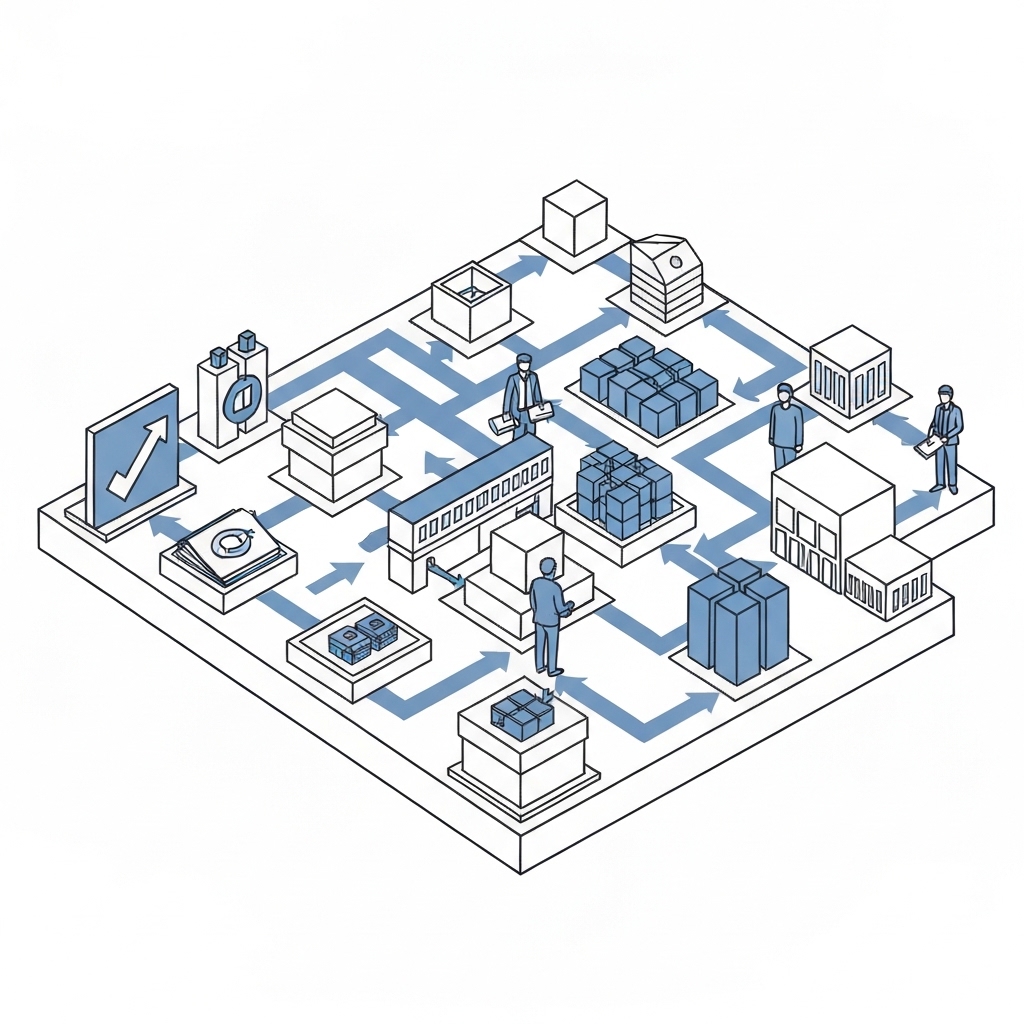
Phase 1: Diagnose in one week. Map the order-to-delivery path, identify the top two bottlenecks, and define a 2-week experiment for each.
Phase 2: Pilot in a controlled subset (e.g., one region or product line).
Phase 3: Scale if results meet predefined thresholds. Phase 4: Institutionalize by updating SOPs and dashboards.
Governance that sustains momentum
Assign an end-to-end optimization owner and a cross-functional steering committee. Schedule quarterly strategy reviews and monthly problem-solving sessions. Ensure funding for rapid pilots and allocate time for teams to work on improvement projects.
Practical starter actions
- Choose 3 end-to-end KPIs and publish them in a single live dashboard.
- Run one 2-week end-to-end experiment per quarter: pick a bottleneck, test a fix, measure, and decide.
- Document one end-to-end process from order to delivery and identify the two most impactful improvements.
- Automate 2 routine decisions to reduce manual handoffs and errors.
Keep it actionable
Communication matters. Share wins and failures openly. Translate data into stories that guide action, not blame. When teams see clear cause-and-effect and tangible results, they lean into continuous improvement as a core habit.