Executive Summary
Measuring IT performance through business-focused metrics creates accountability and drives strategic value. Tracking costs, service quality, and ROI metrics helps technology teams demonstrate their impact on organizational goals. This article provides actionable frameworks for selecting and implementing metrics that bridge the gap between technical operations and business outcomes.
Why IT Metrics Matter for Business Alignment
IT departments often operate in technical silos, measuring success through system uptime or tickets closed. However, business leaders care about cost efficiency, risk mitigation, and revenue enablement. Aligning metrics with these priorities transforms IT from a cost center to a strategic partner.
For example: When a retail company tied IT investments to inventory management system uptime during peak seasons, they reduced stockout incidents by 37% while cutting maintenance costs by $250,000 annually.
4 Critical IT Metrics That Drive Business Value
- Cost Per User: Total IT expenses divided by active users. Tracks efficiency of technology investments.
- Mean Time to Resolution (MTTR): Average time to resolve support tickets. Measures service quality impact on productivity.
- Application ROI: (Business benefits – implementation costs)/implementation costs × 100. Quantifies value of software investments.
- Downtime Cost: Lost revenue + productivity costs during system outages. Creates urgency for infrastructure improvements.
How to Implement Business-Focused IT Metrics
Start by mapping technical capabilities to organizational goals:
- Identify 2-3 business outcomes affected by IT performance (e.g., customer retention, product launch speed)
- Create cross-functional teams to define measurement frameworks
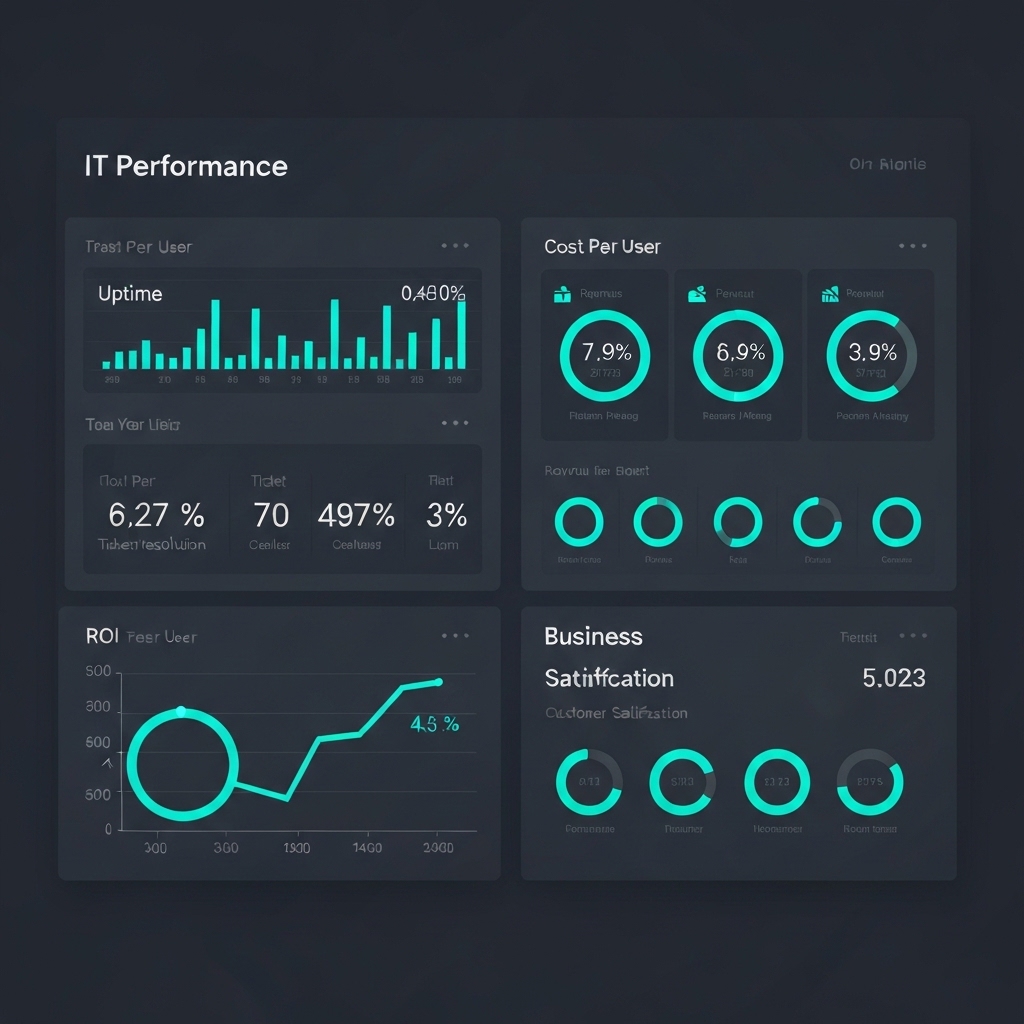
- Use dashboard tools to visualize metrics alongside business KPIs
- Review metrics quarterly with business stakeholders
A financial services firm successfully implemented this approach by connecting cybersecurity spending to risk exposure reduction, securing $1.2M additional budget for threat prevention tools.
Common Implementation Challenges
Data Silos: Technical metrics often live in ITSM tools while business data resides in ERP systems. Integration is critical for meaningful analysis.
Metric Overload: Focus on 3-5 high-impact metrics rather than tracking dozens of vanity metrics.
Changing Requirements: Business priorities shift every 6-12 months. Regularly refresh metric definitions to stay relevant.
Action Plan for Metric Success
Here’s how to start today:
- Document current IT metrics and identify business impacts
- Interview department heads to understand their top 3 performance pressures
- Create a scorecard linking 1 technical metric to 1 business outcome
- Present findings in next executive meeting using before/after visuals
Things to Remember
Metrics alone don’t drive change – conversations do. When presenting data:
- Use business language (e.g., “revenue protection” vs “system availability”)
- Show trends over time rather than single data points
- Include comparative benchmarks (industry standards or internal targets)
What Comes Next
Once foundational metrics are established, consider:
- Implementing predictive analytics for capacity planning
- Creating service catalogs with transparent pricing
- Developing digital dashboards accessible to non-technical stakeholders
Remember: The goal isn’t to measure IT for measurement’s sake, but to create continuous improvement loops that strengthen technology’s role in business success.