
Executive Summary
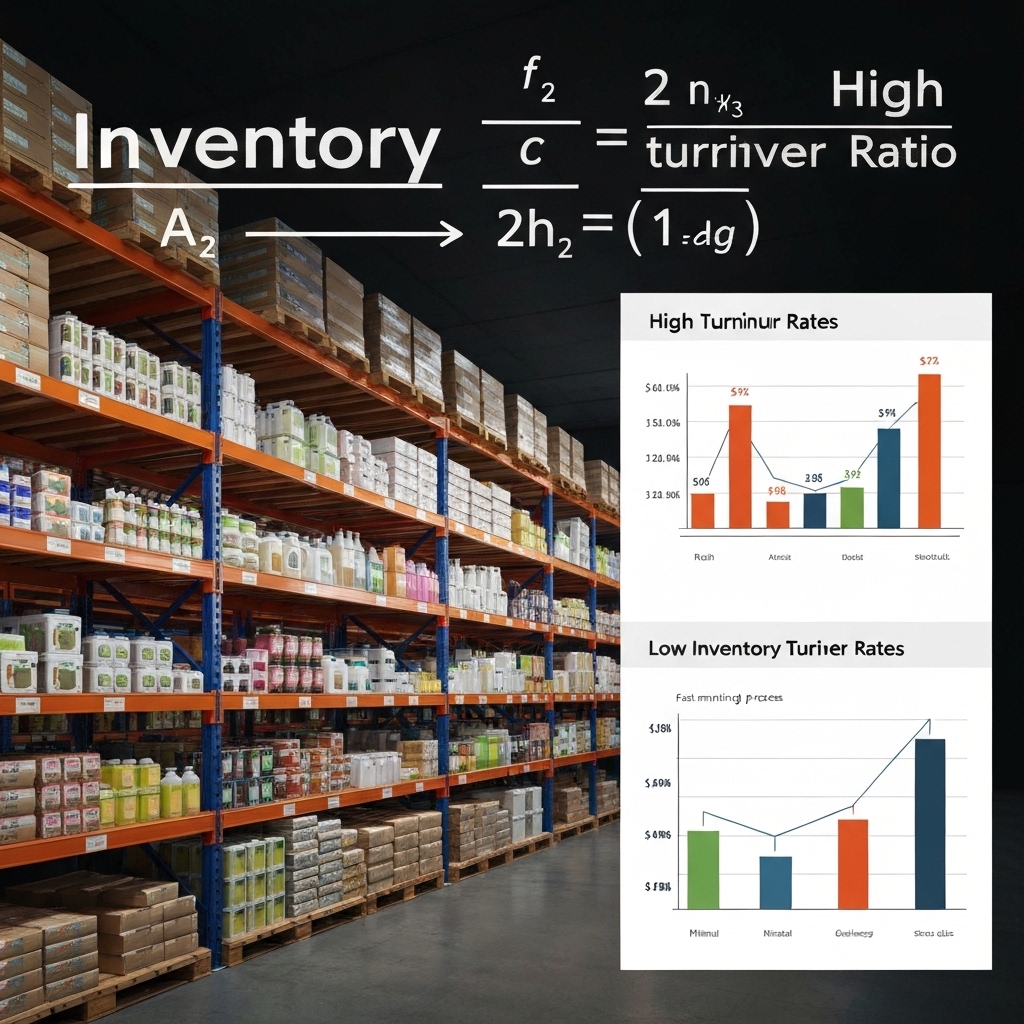
The inventory turnover ratio reveals how effectively your business manages stock. A high ratio means fast-selling products and efficient capital use. A low ratio signals overstocking or slow-moving items. Calculating this metric takes just two steps but provides powerful insights for optimizing cash flow and warehouse space.
What Is Inventory Turnover Ratio?
This metric shows how many times a company sells and replaces inventory during a specific period. It applies to retail, manufacturing, and any business holding physical stock. The higher the ratio, the better your inventory management system performs.
Key fact: Top-performing businesses maintain turnover ratios 2-3x higher than industry averages, according to Deloitte supply chain research.
How to Calculate Inventory Turnover Ratio
Use this simple formula:
- Inventory Turnover = Cost of Goods Sold (COGS) ÷ Average Inventory
Example: A clothing retailer with $1.2M COGS and $300K average inventory has a turnover ratio of 4. This means they sell their entire stock 4 times yearly.
Warning: Use COGS from income statements, not total sales. Average inventory = (Beginning inventory + Ending inventory) ÷ 2 to account for seasonal fluctuations.
Interpreting Your Results
High turnover (8+): Indicates strong demand and effective restocking. But watch for stockouts that lose sales.
Moderate turnover (4-6): Suggests balanced inventory practices. Ideal for businesses with mixed product lifecycles.
Low turnover (below 2): Signals potential problems: outdated products, poor demand forecasting, or excess safety stock.
Industry benchmark: Grocery stores average 14+ turns annually. Furniture retailers typically operate at 2-3 turns.
Action Plan: Improving Low Inventory Turnover
Step 1: Analyze Slow-Moving Stock
Create an ABC analysis: Classify items by sales volume (A=fast sellers, C=slow movers). Focus discount strategies on C items.
Step 2: Optimize Reorder Points
Calculate economic order quantity (EOQ) to balance ordering and holding costs. Many businesses reduce excess stock by 20-30% using EOQ formulas.
Step 3: Improve Demand Forecasting
Use historical sales data and seasonal trends. Implement inventory management software that integrates real-time sales data from multiple channels.
Inventory Turnover in Business Dashboards
Track this metric alongside complementary KPIs:
- Days Sales of Inventory (DSI)
- Stockout Rate
- Gross Margin Return on Investment (GMROI)
Dashboard tip: Use color-coded alerts – green for ratios within target range, red for outliers needing immediate attention.
Common Mistakes to Avoid
- Using retail sales instead of COGS in calculations
- Ignoring seasonal inventory variations
- Comparing ratios across different industries
- Reacting to single-period data without trend analysis
Key Takeaways
Inventory turnover ratio directly impacts cash flow and profitability. Regular calculation reveals:
- Which products drive revenue
- Where to adjust purchasing practices
- Opportunities to reduce holding costs
Next action: Calculate your current ratio using last quarter’s financial statements. Compare against industry benchmarks. Identify top 5 slow-moving items to reprice or promote this month.