
Developing a KPI strategy for manufacturing process optimization is about choosing the right metrics, aligning them with operations, and turning data into action. This guide provides practical steps you can implement now to improve performance, reduce waste, and accelerate strategy execution.
Start with a Clear Objective
Define the core business objective you want to achieve with KPI tracking. Is it reducing cycle time, cutting scrap, or improving on-time delivery? Write it in one sentence and ensure every KPI ties back to this objective. Without this anchor, metrics drift and actions become random.
Action item
- Draft one objective statement for the next 12 months and review it with the leadership team.
- Link each KPI to a specific operational goal and to a responsible owner.
Choose Metrics That Drive Action
Use metrics that indicate cause and effect, not just output. Favor leading indicators (predictors) over lagging indicators (results) when possible. For example, measure machine uptime (leading) to forecast production capacity, not only output volume (lagging).
Examples of practical KPI categories
- Operational efficiency: Overall Equipment Effectiveness (OEE), cycle time, setup time.
- Quality: First-pass yield, scrap rate, defect density by product line.
- Delivery: On-time in-full rate, days inventory outstanding, material lead times.
- Cost: Throughput per hour, cost per unit, energy intensity per unit.
- People and process: Changeover frequency, standard work adherence, training completion rate.
Define Clear Formulas and Data Sources
Ambiguity breeds poor decisions. Use precise formulas and document data sources. For each KPI, answer: what is measured, how, by whom, how often, and how it’s verified.
Formula tips
- OEE = Availability × Performance × Quality
- On-time in-full = (Units delivered on time and complete) / (Total units scheduled)
- Scrap rate = Scrap units / Total produced units
Set Realistic Targets and Timeframes
Targets should be ambitious yet achievable, with a clear plan to reach them. Break annual goals into quarterly milestones and assign owners. When targets are missed, investigate root causes quickly and adjust tactics.
Targeting approach
- Base targets on historical data, process maps, and ongoing improvements.
- Involve process owners in setting targets to ensure buy-in.
- Include both stretch goals and baseline improvements to maintain momentum.
Align KPIs Across the Organization
KPIs should cascade from corporate strategy to plant level. Each level should have a clear line of sight from the top objective to daily actions. Misalignment creates conflicting priorities and muddled execution.
Alignment framework
- Corporate objective → plant-level KPI set → shift-level targets → individual tasks.
- Standard work and daily management visuals (andon, dashboards) to keep focus.
Implement Simple, Real-Time Dashboards
People perform best when they see clear, timely data. Use dashboards that refresh in near real time and are accessible to the teams closest to the work. Keep visuals simple: a few color-coded indicators, trends, and action prompts.
Dashboard essentials
- One page per process area with 5–7 KPIs max.
- Color codes: green = on target, yellow = warning, red = at risk.
- Plain-language explanations for anomalies and recommended actions.
Standardize Data Collection and Governance
Consistent data collection reduces noise and enables accurate comparison over time. Create simple data entry standards, validate data weekly, and fix gaps quickly.
Governance steps
- Assign data stewards for each KPI family (quality, throughput, cost).
- Use standardized definitions and units across all plants.
- Review data quality in weekly management meetings.
Establish a Continuous Improvement Rhythm
Regular, structured reviews turn data into action. Build a cadence that fits your operations—monthly reviews for strategic shifts, weekly quick-hits for frontline teams.
Cadence outline
- Weekly huddle: monitor 3–5 operational KPIs, flag anomalies, assign quick containment actions.
- Monthly review: assess trendlines, adjust targets, and plan root-cause analyses.
- Quarterly deep-dive: evaluate KPI relevance, retire outdated metrics, and introduce new ones aligned with strategy.
Use Root-Cause Analysis for Variances
When KPIs drift, don’t chase the metric—fix the process. Apply a simple root-cause framework to identify why a KPI is off, then implement countermeasures and verify impact.
Practical approach
- Start with 5 Whys or a fishbone diagram to surface causes.
- Test one countermeasure at a time to isolate impact.
- Track the KPI after changes to confirm improvements.
Incentivize Behavior That Moves the KPI Needle
Align incentives with KPI outcomes to drive durable change. Tie performance rewards not just to end results but to process adherence and improvement efforts.
Incentive design tips
- Reward teams for meeting process controls (standard work adherence) and for trending improvements, not just rare peaks.
- Make recognition visible in daily operations, not only at annual reviews.
Mitigate Common KPI Pitfalls
KPIs can backfire if they encourage gaming or discourage innovation. Watch for these traps and address them early.
Common issues
- Overemphasis on speed at the expense of quality.
- Short-term targets that ignore long-term stability.
- KPIs that are too many, too complex, or poorly defined.
Plan for Change Management
New KPIs change how people work. Prepare for resistance with clear communication, training, and quick wins that demonstrate value.
Change steps
- Communicate the why, the what, and the how—early and often.
- Provide hands-on training for data collection and dashboard usage.
- Show early successes to build confidence and ownership.
Scale Your KPI Strategy Across Plants
What works in one plant can be adapted for another, but you must account for variations in line layout, product mix, and talent. A scalable approach keeps core principles while allowing local customization.
Scaling approach
- Start with a pilot in one plant, then roll out with a template that includes definitions, targets, and data sources.
- Use cross-plant communities of practice to share learning and standardize best practices.
Ensure Your KPI Strategy Drives Value
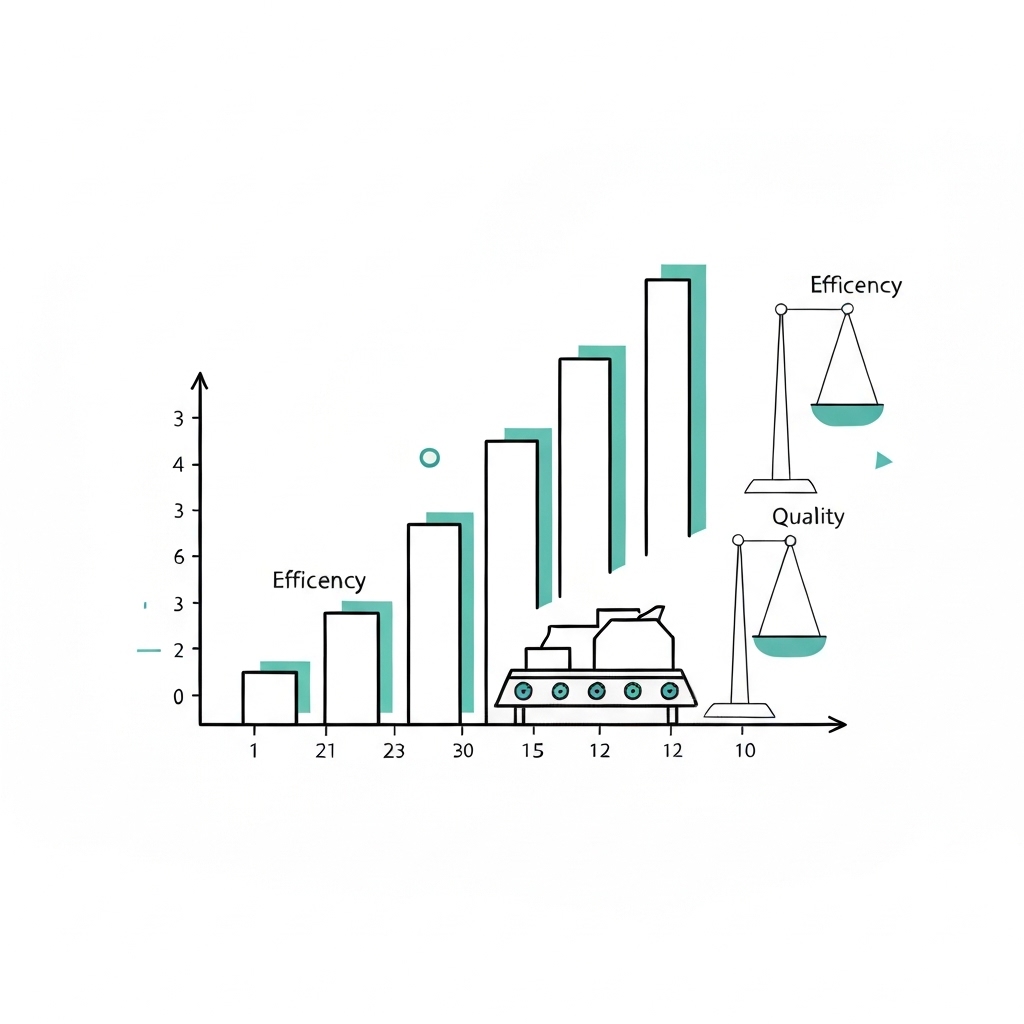
The ultimate test is value delivered. A strong KPI strategy reduces waste, speeds decision making, and improves consistency across operations.
Measurement of value
- Track time-to-insight: how quickly data leads to an action plan.
- Monitor waste reduction and quality gains as a measure of process stabilization.
- Evaluate ROI of KPI initiatives through cost savings and capacity gains.
Brief Case Example
A midsize electronics manufacturer piloted an OEE-focused KPI suite in one line. They defined availability, performance, and quality with clear data sources from the MES and ERP. Weekly huddles surfaced three anomaly alerts. Within three months, cycle time dropped 12%, scrap rate declined 8%, and on-time delivery improved from 92% to 97%. The plant standardized the framework and rolled it to two more lines, achieving incremental gains without adding headcount.
Next Steps
Ready to implement? Start with one objective, pick 3–5 leading KPIs, define formulas, assign owners, and set quarterly targets. Build a simple dashboard, and begin weekly reviews. You’ll create a repeatable system that turns data into deliberate action, not noise.
Key Takeaways
- Anchor KPIs to a single, clear objective at every level.
- Choose metrics that enable fast, decisive action and cycle in real time.
- Document data sources and formulas to avoid ambiguity.
- Use a disciplined cadence of reviews to sustain momentum.
Learn More: How Smart KPI Management helps Manufacturing Optimization