
Unlock the full potential of AI across your business with a strategic roadmap. Learn how to build a strategy map for AI integration across business functions, aligning technology with organizational goals for maximum impact and efficiency.
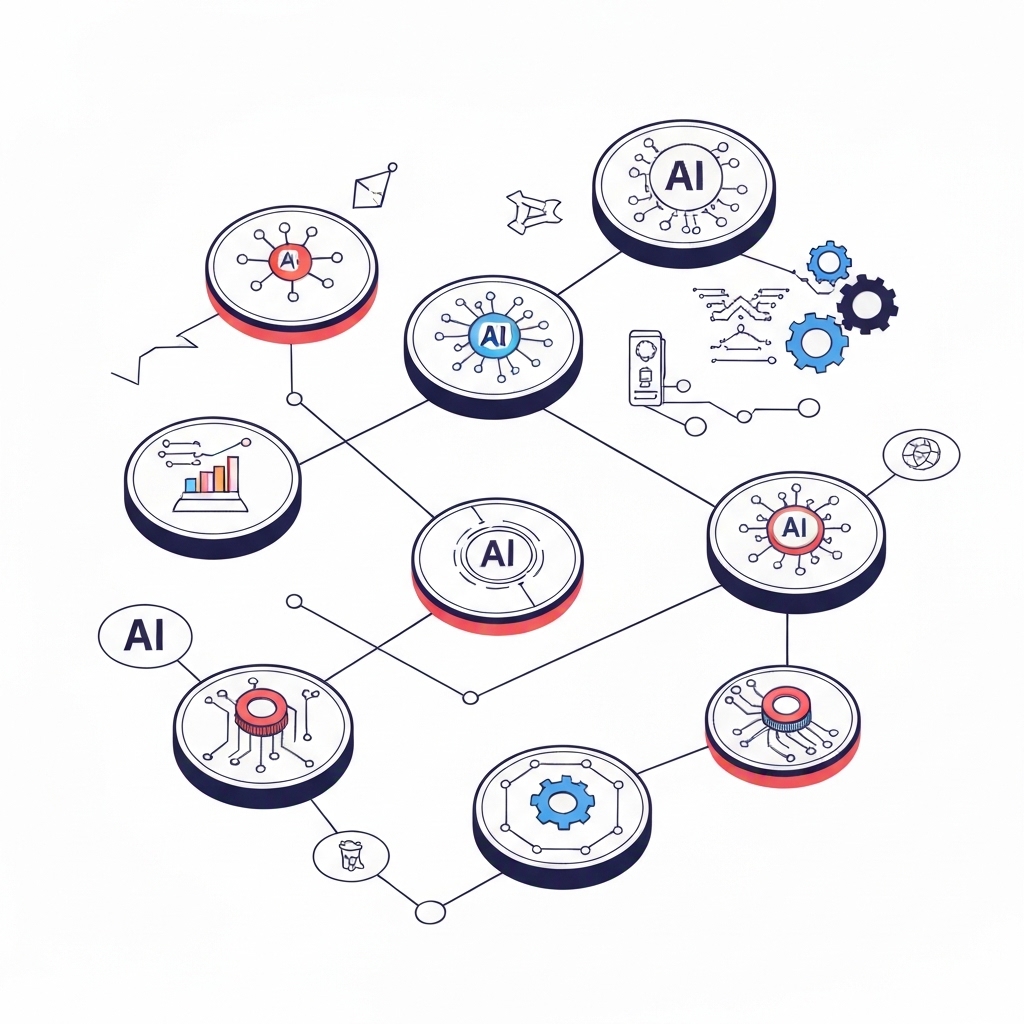
As artificial intelligence (AI) continues to reshape industries, businesses are increasingly recognizing its potential to drive efficiency, innovation, and growth. However, integrating AI across diverse business functions requires a strategic approach that aligns technology with organizational goals, ensures cross-functional collaboration, and delivers measurable results. This is where a strategy map for AI integration becomes indispensable.
In this article, we’ll explore how to build a comprehensive strategy map for AI integration across business functions. From identifying key areas of application to measuring success, this guide provides actionable insights to help you unlock AI’s full potential.
Why a Strategy Map is Essential for AI Integration
A strategy map serves as a visual framework that outlines how AI will be integrated into various business functions to achieve specific objectives. It ensures that AI initiatives are aligned with the organization’s overall strategy, fostering clarity, accountability, and collaboration.
Without a strategy map, AI integration risks becoming fragmented, with siloed efforts that fail to deliver cohesive value. A well-designed map, on the other hand, provides a clear roadmap for implementation, highlights dependencies between functions, and identifies potential bottlenecks before they arise.
Step 1: Define Your Organizational Goals and AI Vision
Before diving into AI integration, it’s crucial to align your efforts with your organization’s broader goals. Ask yourself:
- What are our top strategic priorities (e.g., cost reduction, customer experience improvement, revenue growth)?
- How can AI support these priorities?
- What is our long-term vision for AI adoption?
For example, a retail company might aim to use AI to personalize customer experiences, while a manufacturing firm could focus on predictive maintenance to reduce downtime.
Pro Tip: Involve key stakeholders from across the organization in this process to ensure buy-in and alignment.
Step 2: Identify Business Functions Ripe for AI Integration
Not all business functions will benefit equally from AI. Start by identifying areas where AI can deliver the most impact. Common functions include:
- Customer Service: Chatbots, sentiment analysis, and predictive support.
- Marketing: Personalization, predictive analytics, and campaign optimization.
- Sales: Lead scoring, sales forecasting, and customer insights.
- Operations: Process automation, supply chain optimization, and inventory management.
- Human Resources: Talent acquisition, employee engagement, and skill gap analysis.
- Finance: Fraud detection, risk assessment, and financial forecasting.
Framework to Use: Apply the PARE Framework (Potential, Applicability, Readiness, and Ethics) to evaluate each function’s suitability for AI integration.
Step 3: Map AI Capabilities to Business Functions
Once you’ve identified target functions, map specific AI capabilities to each area. For example:
- Customer Service: Natural Language Processing (NLP) for chatbots.
- Marketing: Machine Learning (ML) for customer segmentation.
- Operations: Computer Vision for quality control.
Tool Tip: Use a Capability-Function Matrix to visualize how AI technologies align with business needs.
Step 4: Establish Key Performance Indicators (KPIs)
To measure the success of your AI integration efforts, define KPIs for each function. These should be specific, measurable, and aligned with your organizational goals. Examples include:
- Customer Service: Reduction in response time, increase in customer satisfaction scores.
- Marketing: Higher conversion rates, improved ROI on campaigns.
- Operations: Decrease in production errors, increase in efficiency.
Best Practice: Use the Balanced Scorecard approach to track financial, customer, internal process, and learning/growth metrics.
Step 5: Create a Roadmap for Implementation
A successful AI integration strategy requires a phased approach. Break down your plan into short-term, medium-term, and long-term milestones.
- Short-Term (0-6 months): Pilot projects, proof of concepts, and stakeholder training.
- Medium-Term (6-18 months): Scaling successful pilots, integrating AI into core processes.
- Long-Term (18+ months): Continuous improvement, advanced AI adoption, and innovation.
Framework to Use: The Agile Methodology can help you iterate quickly and adapt to changing business needs.
Step 6: Foster Cross-Functional Collaboration
AI integration is not the sole responsibility of the IT department. It requires collaboration across functions. Establish cross-functional teams to ensure seamless implementation and knowledge sharing.
Tip: Assign an AI Champion in each department to drive adoption and address challenges.
Step 7: Address Ethical and Governance Considerations
AI integration must be guided by ethical principles and robust governance frameworks. Consider:
- Data privacy and security.
- Bias mitigation in AI models.
- Transparency and explainability of AI decisions.
Framework to Use: Adopt the Responsible AI Framework to ensure ethical AI deployment.
Step 8: Monitor, Evaluate, and Iterate
AI integration is an ongoing process. Regularly monitor your KPIs, gather feedback, and refine your strategy based on lessons learned.
Tool Tip: Use AI Analytics Dashboards to track performance in real-time and identify areas for improvement.
Real-World Example: AI Integration in Retail
Consider a global retailer that implemented a strategy map for AI integration:
- Goal: Enhance customer experience and increase sales.
- Functions Targeted: Marketing, Sales, and Customer Service.
- AI Capabilities: Recommendation engines, chatbots, and predictive analytics.
- KPIs: Increase in average order value, reduction in cart abandonment, and higher customer retention.
- Outcome: A significant increase in sales and improvement in customer satisfaction within a defined period.
Conclusion
Building a strategy map for AI integration across business functions is a strategic imperative. By aligning AI initiatives with organizational goals, fostering collaboration, and measuring impact, businesses can unlock AI’s transformative potential.
Start today by defining your AI vision, identifying key functions, and creating a phased roadmap. With the right strategy, AI can become a powerful catalyst for innovation, efficiency, and growth across your organization.