
Executive Summary
Businesses that treat customer success, experience, and service as separate functions miss growth opportunities. Aligning these areas creates a unified strategy that reduces churn by 20% and boosts revenue by 15%. This article explains how to use KPIs and dashboards to connect these critical functions.
What Separates Customer Success, Experience, And Service?
Customer success focuses on helping users achieve their goals with your product. Experience covers every interaction from first contact to post-purchase. Service handles issue resolution through support channels. Most companies track these in silos, leading to conflicting priorities.
Example: A SaaS company might measure customer success through product adoption rates, experience via website navigation time, and service using ticket resolution speed. These metrics rarely align.
Why Convergence Matters
Modern customers expect seamless interactions. When support teams don’t share data with success managers, customers repeat their issues across channels. This creates frustration and increases operational costs by 30%.
- Service teams handle 40% of repetitive queries that success teams already addressed
- Experience gaps cause 68% of customer churn (Forrester research)
Key Metrics To Track Across Functions
Use these KPIs to create alignment:
- Churn rate: Measures customer loss across all touchpoints
- Customer effort score (CES): Tracks ease of getting help
- Product adoption velocity: Shows how quickly users reach “aha” moments
- First contact resolution (FCR): Service team effectiveness metric
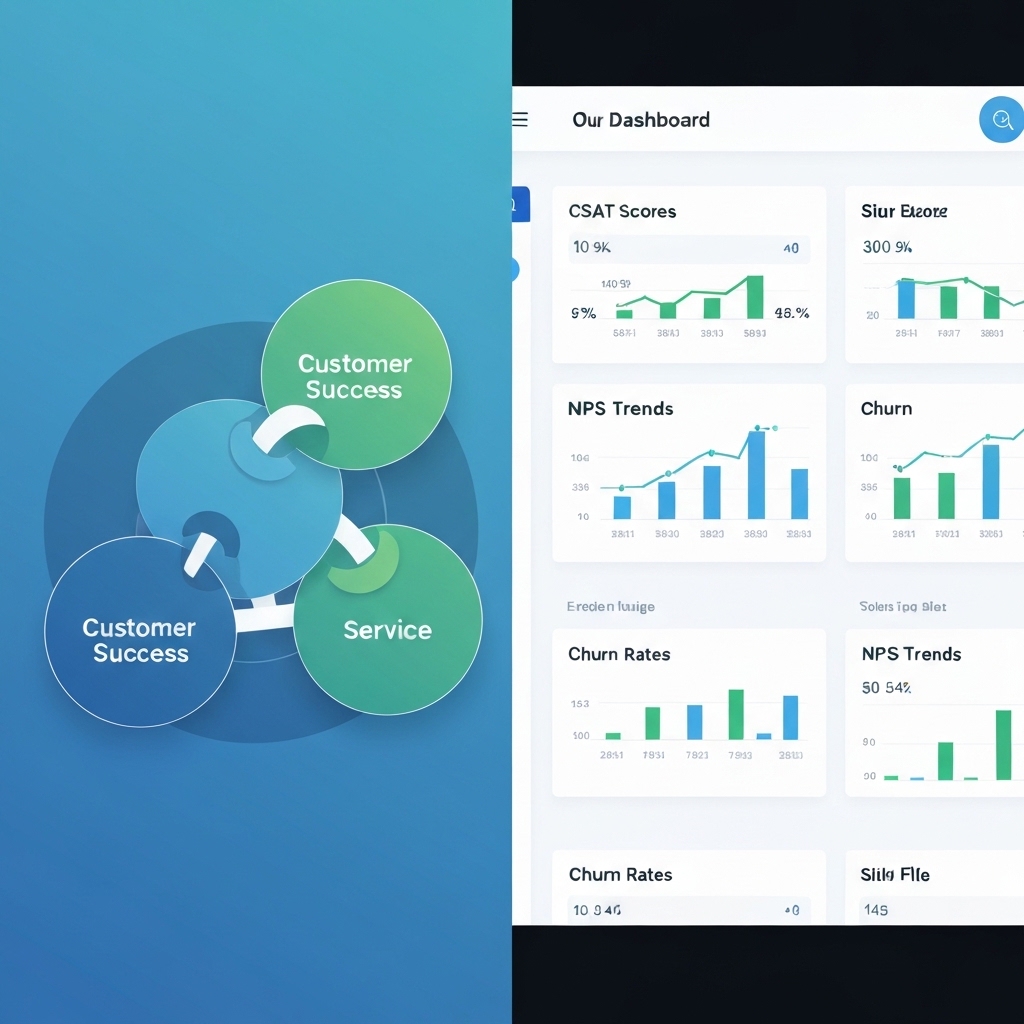
Combine these in a single dashboard to spot patterns. A sudden CES spike might indicate onboarding failures requiring both success and service team intervention.
Building A Unified Dashboard
Create three data layers:
- Operational metrics: Daily ticket volume, account health scores
- Behavioral data: Feature usage trends, support channel preferences
- Financial impact: Revenue per customer segment
Use color coding to highlight interdependencies. Red alerts in service metrics should automatically trigger success team workflows.
Action Plan For Integration
Follow these steps to start alignment:
- Map customer journeys: Identify where service issues delay success milestones
- Create shared goals: Set joint targets for reducing support tickets during onboarding
- Implement cross-training: Have service reps shadow success managers monthly
- Build feedback loops: Automatically share resolved ticket details with success teams
Things To Remember
Convergence isn’t about merging teams but aligning objectives. Start small: pick one customer journey phase to optimize. Track how reducing service interactions during product setup impacts long-term success metrics.
Warning: Don’t force integration without process changes. Teams need new workflows and tools to share data effectively.
What’s Next?
Begin by auditing current metrics. Do your KPIs reward team competition or collaboration? Replace isolated targets with joint performance indicators. Next, pilot integrated dashboards with one customer segment before scaling company-wide.
Takeaways
Aligning customer functions creates a 360° view of client needs. Use shared KPIs to break down silos and improve retention. Start with one high-impact metric like churn rate, then build integrated processes around it. The goal isn’t perfect metrics but faster problem-solving across teams.