
Discover the AI Strategy and People-Centric Approach: The 70% Rule to balance technology and human expertise. Learn how this framework drives innovation, enhances productivity, and fosters collaboration in your organization.
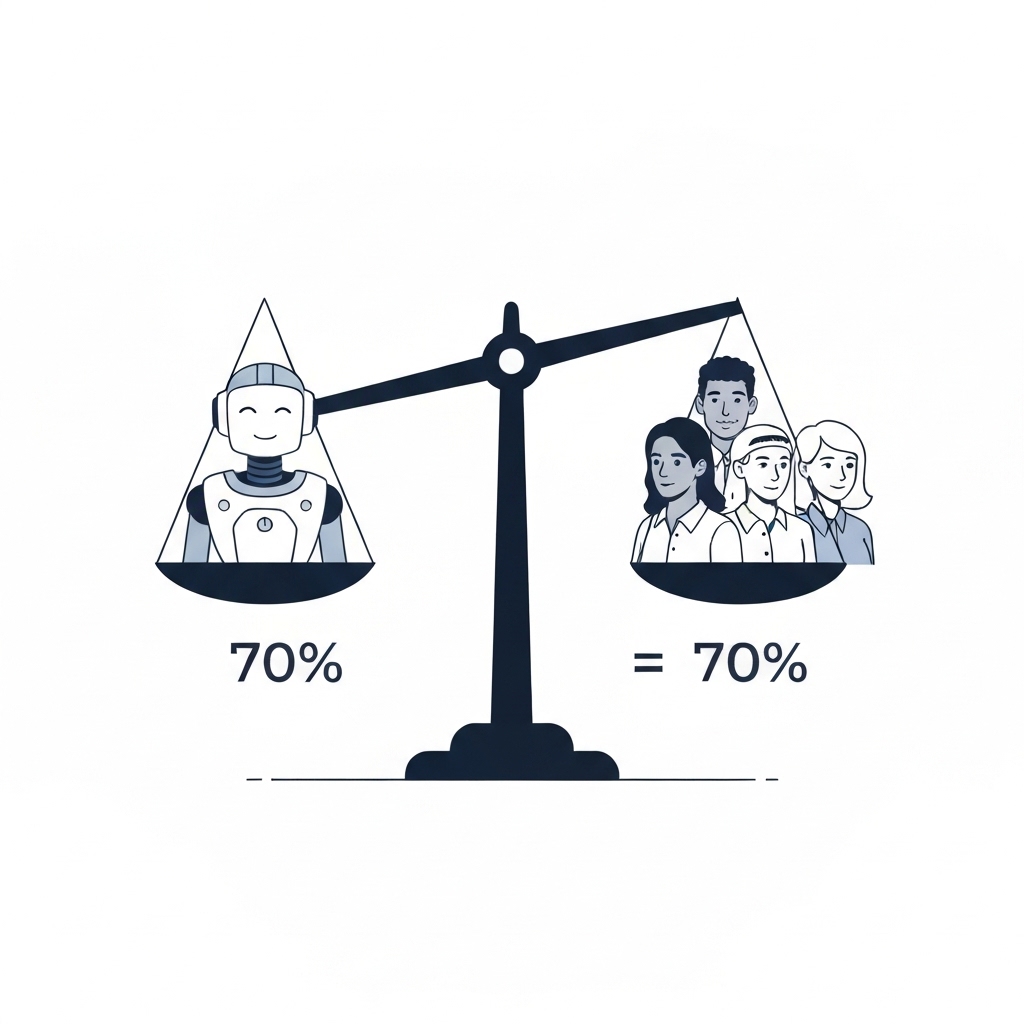
In the rapidly evolving landscape of artificial intelligence (AI), organizations face a critical challenge: integrating transformative technology while prioritizing their most valuable asset—their people. The 70% Rule emerges as a strategic framework that champions a people-centric approach to AI adoption. This rule ensures human expertise remains at the heart of decision-making, innovation, and collaboration.
This article delves into the principles, practical applications, and benefits of the 70% Rule. By striking a balance between AI and human intelligence, businesses can unlock new levels of productivity, creativity, and employee engagement.
What is the 70% Rule in AI Strategy?
The 70% Rule is a guiding principle advocating that 70% of an organization’s AI strategy should focus on empowering people, while the remaining 30% optimizes technology. This framework flips the traditional tech-first mindset, prioritizing human-centered design, ethical considerations, and employee well-being in AI adoption.
At its core, the 70% Rule recognizes AI as a tool to enhance, not replace, human expertise. By focusing on people, organizations ensure AI amplifies the human experience in the workplace.
Why the 70% Rule Matters
AI’s rise has sparked excitement and apprehension. While its potential for automation, data analysis, and efficiency is undeniable, concerns about job displacement, ethics, and organizational culture persist. The 70% Rule addresses these challenges by:
- Fostering Trust and Adoption: When employees feel valued and involved in AI initiatives, they are more likely to embrace the technology.
- Driving Ethical AI: A people-centric approach ensures AI systems are designed with fairness, transparency, and accountability.
- Enhancing Creativity and Innovation: By automating repetitive tasks, AI frees humans to focus on strategic, creative, and empathetic work.
- Building a Future-Ready Workforce: The 70% Rule encourages upskilling and reskilling, preparing employees for an AI-driven future.
The Three Pillars of the 70% Rule
Effective implementation of the 70% Rule rests on three key pillars:
1. Empowering Employees Through AI
AI should augment human capabilities, not replace them. For example, AI-powered analytics provide actionable insights, enabling better decision-making. Automation handles mundane tasks, allowing focus on high-value activities.
Practical Tip: Involve employees in AI system design and implementation. Their insights help identify pain points and ensure technology meets their needs.
2. Prioritizing Ethical and Inclusive AI
A people-centric approach demands fair, transparent, and inclusive AI systems. Address biases in data and algorithms, ensure privacy, and involve diverse teams in development.
Framework for Ethical AI:
- Transparency: Clearly communicate how AI decisions are made.
- Accountability: Establish mechanisms to address AI-related errors or biases.
- Inclusivity: Ensure AI systems benefit all users, regardless of background.
3. Investing in Human Capital
The 70% Rule emphasizes upskilling and reskilling employees to collaborate with AI. Provide training programs, foster continuous learning, and create growth opportunities.
Actionable Strategy: Launch AI literacy programs to demystify technology and equip employees with skills to work alongside AI tools.
How to Implement the 70% Rule in Your Organization
Adopting the 70% Rule requires a strategic approach. Follow these steps:
- Assess Your Current AI Strategy: Evaluate existing initiatives. Are they tech-driven or people-focused? Identify areas where AI can empower employees.
- Engage Your Workforce: Involve employees in AI adoption. Conduct surveys, hold focus groups, and gather feedback to understand their concerns and aspirations.
- Design AI Solutions with People in Mind: Develop AI systems that solve real-world employee problems. For example, an AI-powered scheduling tool can reduce administrative burdens for managers.
- Foster a Culture of Collaboration: Encourage cross-functional teams to work on AI projects, ensuring both technical and non-technical perspectives are considered.
- Measure Success Beyond ROI: Evaluate success using metrics like employee satisfaction, engagement, productivity gains, retention, and creativity levels.
Real-World Examples of the 70% Rule in Action
Several organizations exemplify the 70% Rule:
- IBM: IBM’s AI strategy augments human capabilities. Tools like Watson assist employees in decision-making, freeing them for strategic tasks.
- Unilever: Unilever uses AI to streamline operations while investing in employee training, ensuring workers thrive in an AI-driven environment.
- Salesforce: Salesforce’s Einstein AI platform empowers sales and marketing teams with insights, ensuring AI enhances workflows without complication.
Overcoming Challenges in Implementing the 70% Rule
Common obstacles include:
- Resistance to Change: Address fears of job displacement by communicating AI’s benefits and involving employees in the process.
- Data Privacy Concerns: Ensure AI systems comply with data protection regulations and prioritize user privacy.
- Skill Gaps: Invest in training programs to bridge skill gaps and prepare employees for AI collaboration.
The Future of AI Strategy: A Balanced Approach
As AI reshapes industries, the 70% Rule provides a roadmap to harness its potential while upholding human-centric values. By prioritizing people, businesses build trust, drive innovation, and create a workplace where humans and technology thrive together.
In a world where AI is increasingly pervasive, the 70% Rule underscores that technology’s true power lies in amplifying human potential. It’s not about choosing between AI and people—it’s about finding the perfect balance.