
A resilient supply chain isn’t an option – it’s a competitive advantage. This article lays out a practical, executable framework for advanced supply chain risk management that business leaders can implement now. You’ll find actionable steps, clear metrics, and concrete examples you can tailor to your organization.
1. Redefine risk with a decision-first mindset
Risk is not just a downside to dodge; it’s a signal guiding your strategy. Start by translating risk into decision factors you can act on, such as impact, probability, and detectability.
Create a risk appetite grid that aligns with your business strategy. For each major risk, define a recommended action: avoid, mitigate, transfer, or accept. This turns abstract threats into concrete choices you can explain to leadership and execute on.
2. Build a dynamic, map-based risk profile
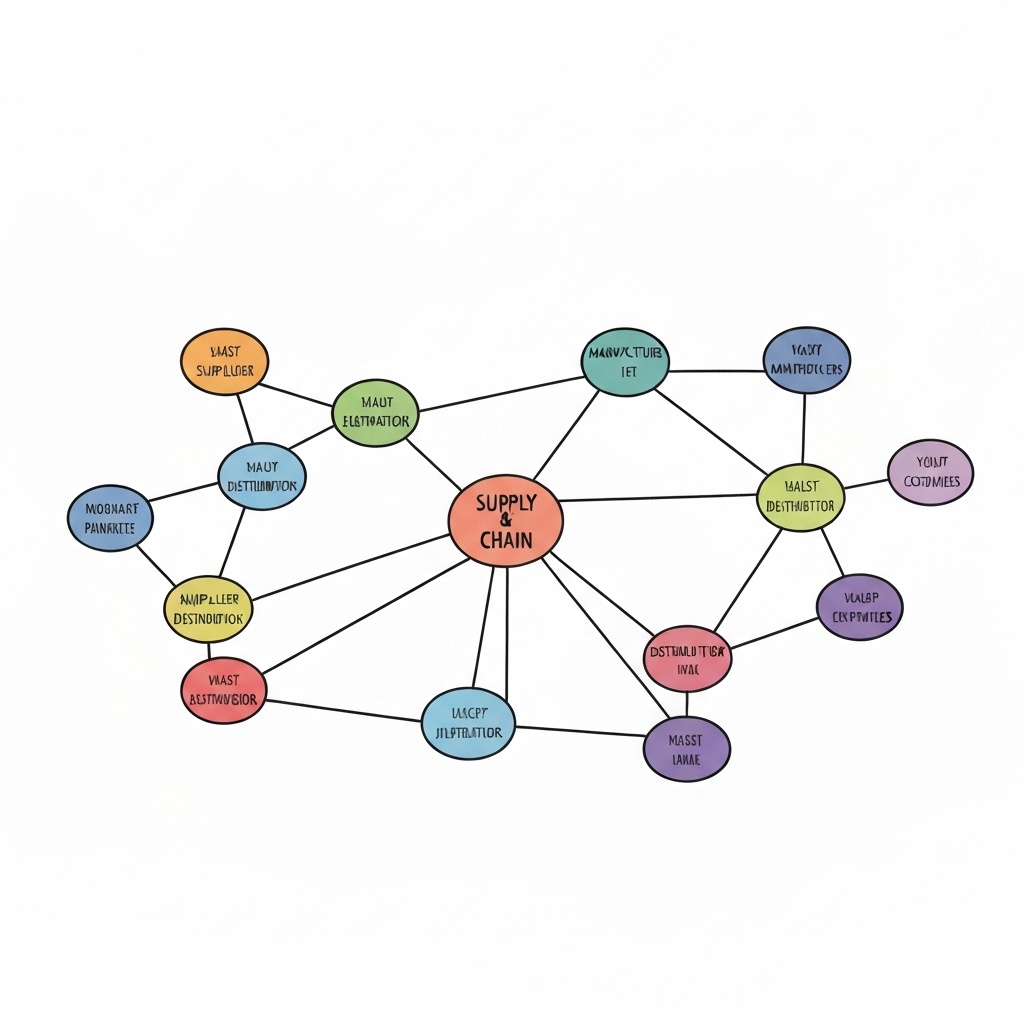
Move beyond static risk registers. Develop a live risk map that links suppliers, geographies, logistics modes, and critical components. Visualize exposure by node, route, and tier.
Use color-coding to indicate severity and a time horizon to show urgency. Update weekly or after any major disruption. This map becomes your early warning system and a backbone for prioritizing mitigation efforts.
3. Segment suppliers by strategic value and risk
Not all suppliers are equal. Classify suppliers into tiers based on criticality to the product, financial risk, and operational dependency.
For high-value, high-risk suppliers, implement additional controls: dual sourcing, inventory buffers, frequent performance reviews, and collaborative risk-sharing agreements. For low-value or low-risk suppliers, standard monitoring suffices. This segmentation lets you allocate resources where they matter most.
4. Implement dual sourcing and strategic inventory buffers
Dual sourcing reduces single-point failure risk without overburdening the supply chain. Start by identifying components with the highest impact on your output and the greatest disruption risk.
For those, establish a second supplier in a different geography or with a different logistics profile. Pair this with targeted safety stock—enough to bridge typical disruption windows but not so much that you carry excessive carry costs. Use service level targets to balance cost and resilience.
5. Diversify logistics and logistics intelligence
Dependence on a single transport corridor magnifies risk. Map your end-to-end logistics and identify alternative routes, carriers, and modes. Invest in logistics visibility tools that provide real-time tracking, ETA accuracy, and disruption alerts.
Develop contingency plans for each critical route, including pre-negotiated air or coastal contingencies and rapid mode-shift playbooks.
6. Embed scenario planning into strategy reviews
Go beyond quarterly planning. Run quarterly disruption scenarios—geopolitical shocks, port shutdowns, energy price spikes, and supplier insolvencies. For each scenario, define triggers, decision rules, and restoring actions.
Tie these scenarios to your capital allocation and project prioritization so the business can pivot quickly when signals appear.
7. Harden operations with cross-functional playbooks
Create concise, role-specific playbooks for common disruption events. Each playbook should include: the trigger, decision authority, critical contacts, and a 24-, 72-, and 120-hour action plan. Cross-functional ownership (procurement, operations, finance, IT) ensures faster containment and faster recovery.
8. Invest in supplier collaboration and transparency
Transparency reduces uncertainty and speeds recovery. Establish regular business reviews focused on risk, not just performance.
Share risk metrics, demand forecasts, and contingency plans with suppliers. Jointly develop improvement roadmaps, including quality, lead time reduction, and supplier process improvements. A shared governance model aligns incentives for resilience.
9. Align risk management with product and portfolio strategy
Resilience must support value creation. Ensure that risk controls do not erode time-to-market or product quality. Balance resilience investments with growth objectives by tying risk metrics to portfolio choices, such as prioritizing products with flexible configurations or modular designs that tolerate supply disruptions.
10. Measure with actionable risk KPIs
Use a concise set of KPIs that drive behavior and accountability.
Consider:
- Mean time to detect (MTTD) and mean time to respond (MTTR) to disruptions
- Disruption exposure score by tier and geography
- Supply risk-adjusted service level (SRASL)
- Inventory turns adjusted for risk buffers
- Cash flow impact of disruptions and recovery time
Review these metrics in leadership dashboards weekly, not once a quarter. Pair metrics with clear owners and escalation paths to keep momentum.
11. Leverage digital twins for proactive resilience
A digital twin of your supply chain lets you simulate shock scenarios and test mitigation ideas without real-world consequences.
Model supplier failure, transit delays, demand spikes, and inventory constraints. Use outputs to optimize inventory policies, network design, and supplier diversification. Start with a focused subset (e.g., a critical SKU) and scale as you prove value.
12. Deploy automation to accelerate decision cycles
Automation should support decision speed, not replace judgment. Implement rule-based workflows that auto-trigger countermeasures when thresholds are breached (e.g., reroute shipments, issue purchase orders to backup suppliers, adjust safety stock).
Use alerting that prioritizes disruptions by impact and urgency, and ensure humans retain final approval for strategic moves.
Cultivate a risk-aware culture
Resilience is a cultural capability as much as a process. Train teams to recognize early signs of disruption, report them promptly, and follow the playbooks without hesitation.
Reward proactive risk management and cross-functional collaboration. A culture that treats disruption as an opportunity to improve will outperform a culture that treats it as a threat.

Establish governance for continuous improvement
Set up a resilience council with monthly reviews of risk posture, incident learnings, and improvement roadmaps.
Track progress on mitigation projects, supplier development plans, and technology investments. Use after-action reviews to extract concrete learnings and translate them into updated playbooks and policies.
Practical implementation blueprint
Turn theory into action with these steps:
- Step 1: map critical components and top disruption scenarios for your product lines.
- Step 2: segment suppliers by strategic value and risk, and identify dual-sourcing candidates.
- Step 3: design targeted safety stock and buffer policies aligned with service levels.
- Step 4: create end-to-end playbooks for the top three disruption scenarios.
- Step 5: deploy visibility and alerting tools with real-time dashboards.
- Step 6: establish a risk-focused governance cadence and executive sponsorship.
A practical example: a maker of modular electronics
Imagine a company that assembles modular electronics with several critical chips sourced from two regions. A regional port closure disrupts ship-to-hub flows. With a risk map in place, the company detects exposure in week one.
Dual sourcing ensures one alternate supplier’s chips arrive just in time. The logistics team switches routes, guided by a predefined playbook. Safety stock and buffer policies absorb the shock, while digital twins simulate the disruption to validate recovery timing.
Within days, service levels return to target, and the disruption creates a learning loop: supplier collaboration improves, inventory policies tighten, and future playbooks expand. This is resilience in action, not a one-off fix.
Common pitfalls and how to avoid them
Be mindful of these traps:
- Overengineering risk plans that paralysis teams; keep playbooks concise and actionable
- Data silos that slow detection; invest in integrated data platforms
- Misaligned incentives with suppliers; ensure shared goals and transparent metrics
- Reactive rather than proactive risk culture; schedule regular disruption drills
Next steps for fast impact
Start small, scale fast. Pick a high-impact product line, map its risks, and implement a two-supplier strategy with a simple playbook.
Add one new KPI and a brief scenario workshop this quarter. By the next plan, expand to the next product family and broaden the risk map. You’ll build resilience incrementally while preserving efficiency and growth.
Concluding thought
Advanced supply chain risk management is not about chasing perfection; it’s about creating a flexible, informed system that adapts quickly.
When leaders link risk to decision-making, invest in visibility, and empower cross-functional teams, disruptions become catalysts for smarter operations and stronger competitive advantage.