
Discover how Activity-Based Costing in the Age of AI revolutionizes cost allocation with machine learning. Unlock precision, efficiency, and smarter financial decisions today.
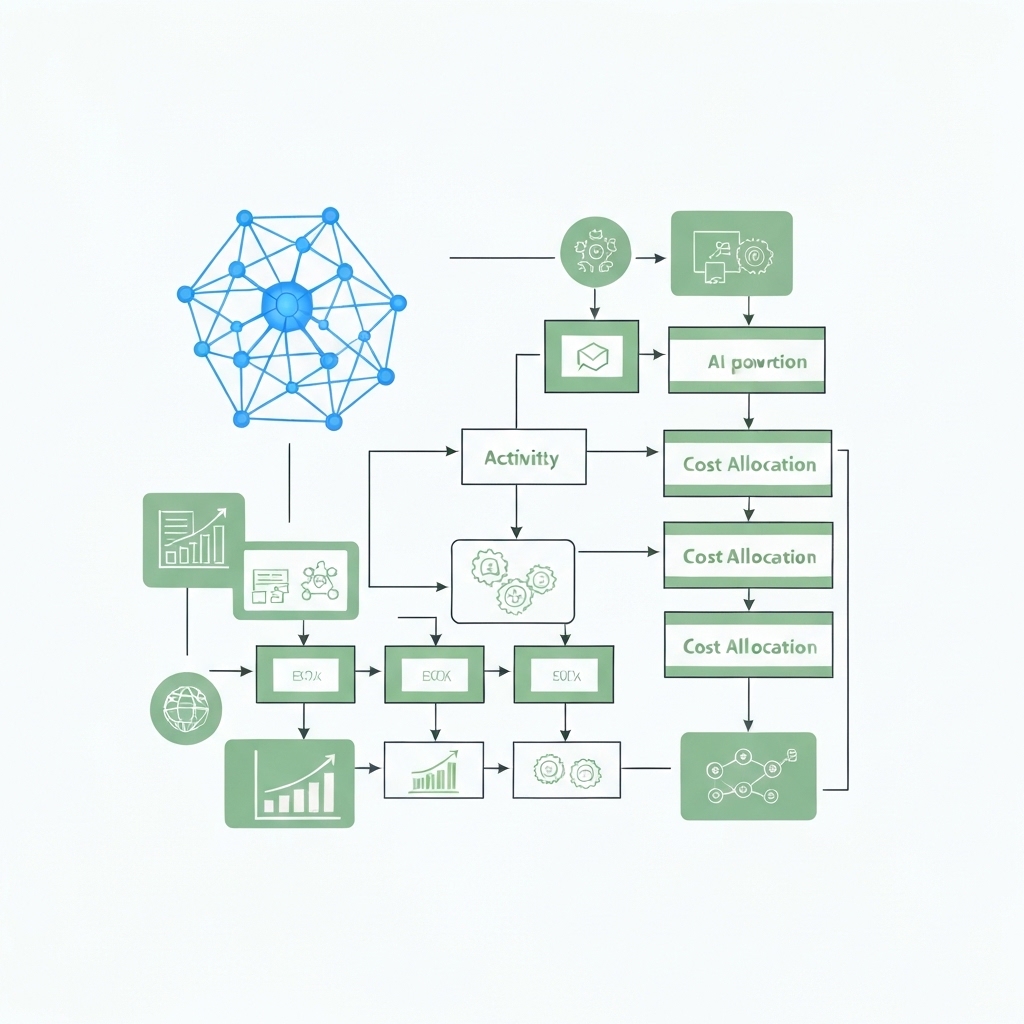
In today’s fast-paced business environment, cost management is no longer just about cutting expenses—it’s about understanding where every dollar goes and maximizing its impact. Activity-Based Costing (ABC) has long been a cornerstone of accurate cost allocation, but its manual, time-consuming nature often limits its effectiveness. Enter Artificial Intelligence (AI) and Machine Learning (ML), technologies that are revolutionizing how businesses approach cost management. This article explores how AI-driven Activity-Based Costing is transforming cost allocation, offering unprecedented precision, efficiency, and strategic insights.
What is Activity-Based Costing (ABC)?
Activity-Based Costing is a methodology that assigns costs to products, services, or customers based on the activities they consume. Unlike traditional costing methods, which often rely on arbitrary allocations (e.g., machine hours or direct labor), ABC identifies specific activities that drive costs and links them directly to cost objects. This approach provides a more accurate picture of profitability, enabling better decision-making.
However, implementing ABC manually is resource-intensive. It requires meticulous data collection, complex calculations, and continuous updates—challenges that AI and ML are uniquely positioned to address.
The Role of AI and Machine Learning in ABC
AI and ML are powerful tools that can automate, optimize, and enhance the ABC process. Here’s how:
1. Automated Data Collection and Processing
AI systems can gather data from multiple sources—ERP systems, CRM platforms, IoT devices, and more—in real time. Machine Learning algorithms can clean, categorize, and analyze this data, eliminating the need for manual intervention. This ensures that cost drivers are accurately identified and tracked.
2. Predictive Cost Modeling
ML models can predict future costs by analyzing historical data and identifying patterns. For example, an ML algorithm can forecast how changes in production volume or resource usage will impact costs, enabling proactive decision-making.
3. Dynamic Cost Allocation
Traditional ABC relies on static cost drivers, which may not reflect the dynamic nature of modern businesses. AI-powered systems can adjust cost allocations in real time based on changing conditions, ensuring accuracy and relevance.
4. Enhanced Accuracy and Granularity
ML algorithms can detect subtle relationships between activities and costs that might be missed by human analysts. This allows for more granular cost allocation, providing deeper insights into profitability drivers.
5. Scalability and Efficiency
AI-driven ABC can handle large volumes of data and complex calculations at scale, making it feasible for businesses of all sizes to implement this methodology without overwhelming their teams.
Practical Applications of AI-Driven ABC
The integration of AI and ML into Activity-Based Costing is delivering tangible benefits across industries. Here are some real-world applications:
1. Manufacturing
In manufacturing, AI-driven ABC can analyze machine usage, labor hours, and material consumption to allocate costs more accurately. For instance, an ML model can identify which production lines are most cost-effective and which activities are driving inefficiencies, enabling targeted improvements.
2. Healthcare
Hospitals and healthcare providers can use AI-powered ABC to allocate costs across departments, procedures, and patient types. This helps identify areas of waste and optimize resource allocation, ultimately improving patient care and financial performance.
3. Retail
Retailers can leverage AI-driven ABC to understand the true costs of serving different customer segments or channels. By analyzing activities like order fulfillment, marketing campaigns, and customer service, businesses can make data-driven decisions to enhance profitability.
4. Professional Services
For consulting firms, law practices, and other service-based businesses, AI-driven ABC can track time spent on various activities and allocate costs to specific projects or clients. This ensures accurate billing and highlights opportunities to streamline operations.
Implementing AI-Driven ABC: A Step-by-Step Guide
Ready to harness the power of AI for Activity-Based Costing? Here’s a practical roadmap to get started:
- Assess Your Needs: Identify the key areas where ABC can add value, such as product profitability analysis or cost reduction initiatives. Define clear objectives to guide your implementation.
- Invest in the Right Tools: Choose AI and ML platforms that integrate seamlessly with your existing systems. Look for solutions that offer automation, predictive analytics, and real-time reporting.
- Clean and Prepare Your Data: High-quality data is essential for accurate cost allocation. Use AI tools to clean, standardize, and enrich your data before feeding it into ML models.
- Train Your Models: Train ML algorithms on historical data to identify cost drivers and relationships. Continuously refine the models as new data becomes available.
- Monitor and Optimize: Regularly review the outputs of your AI-driven ABC system to ensure accuracy and relevance. Use insights to drive process improvements and strategic decisions.
Overcoming Challenges
While AI-driven ABC offers significant advantages, it’s not without challenges. Here’s how to address common hurdles:
- Data Quality: Poor-quality data can lead to inaccurate cost allocations. Invest in data governance and cleansing tools to ensure reliability.
- Change Management: Transitioning to AI-driven ABC may require cultural shifts within your organization. Provide training and communicate the benefits to gain buy-in.
- Cost of Implementation: While AI tools can be expensive, the long-term ROI often outweighs the initial investment. Start with pilot projects to demonstrate value before scaling up.
The Future of Cost Allocation: Smarter, Faster, Better
As AI and ML continue to evolve, their impact on Activity-Based Costing will only grow. Future advancements may include:
- Real-Time Costing: Instantaneous cost allocation as activities occur, enabling immediate decision-making.
- Autonomous Cost Optimization: AI systems that automatically identify and implement cost-saving opportunities.
- Integration with Emerging Technologies: Combining AI-driven ABC with IoT, blockchain, and other technologies for even greater insights.
Conclusion
Activity-Based Costing in the Age of AI is a transformative approach to cost management. By leveraging machine learning, businesses can achieve unprecedented precision, efficiency, and strategic agility in cost allocation. Whether you’re in manufacturing, healthcare, retail, or professional services, AI-driven ABC offers a pathway to smarter financial decisions and sustainable growth.
The future of cost allocation is here. Are you ready to embrace it?