
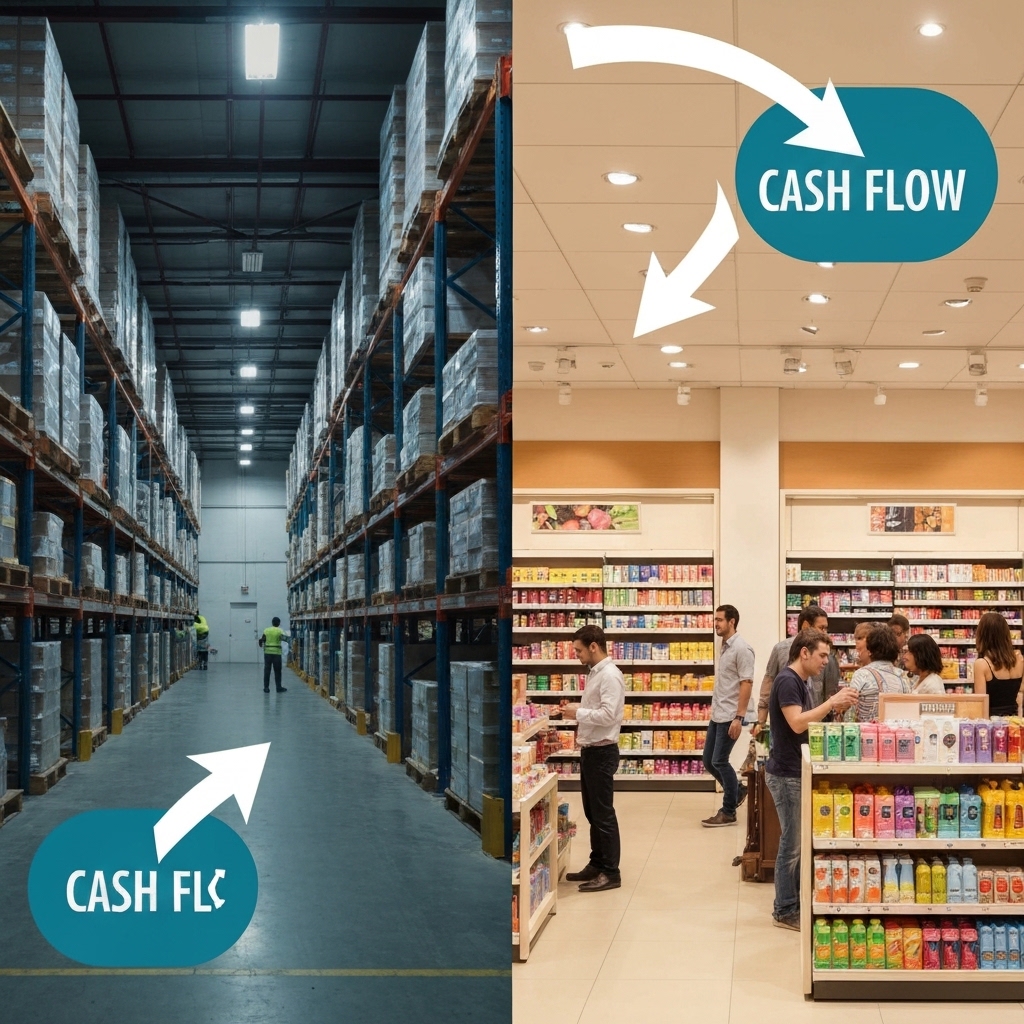
Key Takeaway
A declining inventory turnover ratio signals slower sales or overstocking, directly impacting cash flow and profitability. This article explains how to diagnose the root causes and implement practical fixes to restore healthy inventory cycles.
What Is Inventory Turnover?
Inventory turnover measures how many times a company sells and replaces its stock within a specific period. The formula is:
- Inventory Turnover Ratio = Cost of Goods Sold (COGS) / Average Inventory
A ratio of 4 means the business sells its entire inventory four times a year. A drop from 4 to 2 means products sit twice as long, tying up capital and increasing storage costs.
Common Causes of Declining Turnover
Three primary issues trigger lower turnover:
- Weak Demand: Reduced customer interest due to market shifts or poor product-market fit
- Overstocking: Buying too much inventory based on outdated sales forecasts
- Supply Chain Delays: Inconsistent restocking causing stockouts followed by bulk purchases
Example: A clothing retailer orders 1,000 winter coats but only sells 300 units. The remaining 700 coats occupy warehouse space for months, lowering turnover.
Business Risks of Low Turnover
Ignoring declining turnover creates cascading problems:
- Cash Flow Crunches: Frozen capital in unsold stock limits funds for growth initiatives
- Obsolescence Risk: Perishable goods or trend-based products become unsellable
- Increased Costs: Storage, insurance, and depreciation eat into profits
Fact: Companies with turnover ratios below industry benchmarks face 20-30% higher operational costs, per Deloitte supply chain research.
Things to Remember
Inventory turnover isn’t a standalone metric. Cross-reference it with:
- Sales growth trends
- Seasonal demand patterns
- Supplier lead times
Action Plan: Fixing Low Inventory Turnover
Four immediate steps to restore healthy turnover:
1. Analyze Sales Data by Product Category
Identify underperforming SKUs using point-of-sale data. Example: A grocery store discovers 80% of shelf space is occupied by products generating only 20% of revenue.
2. Optimize Reorder Points
Calculate reorder thresholds using the formula:
- Reorder Point = (Average Daily Sales × Lead Time) + Safety Stock
Reduce order quantities by 15-20% for slow-moving items while maintaining customer service levels.
3. Clear Slow-Moving Stock
Implement time-bound promotions or bundle deals. A furniture company offered “Buy One, Get 50% Off” on discontinued models, clearing 65% of stagnant inventory in 8 weeks.
4. Audit Supplier Contracts
Negotiate flexible minimum order quantities (MOQs). One electronics manufacturer reduced MOQs by 30% after switching to regional suppliers with shorter lead times.
What’s Next?
Implement real-time inventory tracking tools to monitor turnover weekly. Set alerts for sudden drops and integrate data into your business performance dashboard for proactive decision-making.
Final Check: Are You Making These Mistakes?
- Using annual turnover calculations when monthly tracking is needed
- Ignoring seasonal inventory requirements (e.g., holiday goods)
- Mixing perishable and non-perishable inventory in turnover analysis
Fix these errors by implementing granular tracking and segmentation by product type.
Keep in Mind
Healthy turnover ratios vary by industry. Retailers average 8-12, while automotive dealerships operate at 2-3. Benchmark against sector-specific standards using resources like the Retail Owners Institute reports.
Here’s What to Do Today
- Run an ABC analysis to prioritize inventory by revenue impact
- Adjust purchase orders for the next quarter using 3-month moving average sales data
- Train sales teams to upsell products with excess stock
Measure progress monthly. A 10% improvement in turnover ratio typically unlocks 5-7% better gross margin returns on inventory investments (GMROI).