
Discover the 5 key metrics for measuring the success of AI automation in business processes. Unlock actionable insights to optimize efficiency, ROI, and scalability in your AI-driven operations.
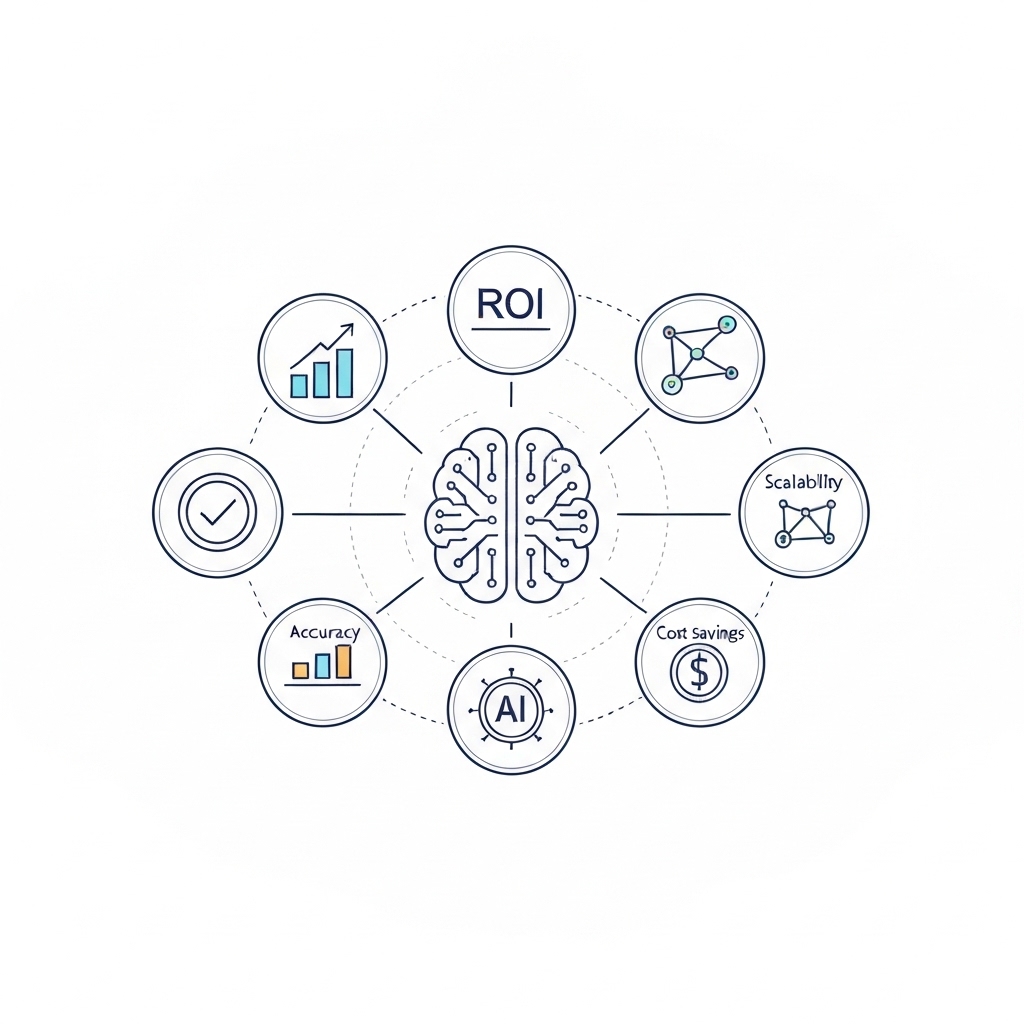
As businesses increasingly adopt AI automation to streamline operations, enhance productivity, and drive innovation, the need to measure its impact has become paramount. Without clear metrics, it’s impossible to determine whether your AI investments are delivering the desired results. This article explores five key metrics that provide actionable insights into the success of AI automation in business processes. By focusing on these metrics, you can optimize efficiency, maximize ROI, and ensure scalability in your AI-driven operations.
1. Efficiency Gains: Time and Resource Optimization
One of the most immediate benefits of AI automation is its ability to improve operational efficiency. Measuring efficiency gains involves tracking how much time and resources are saved by automating repetitive or time-consuming tasks.
How to Measure:
- Cycle Time Reduction: Calculate the time taken to complete a process before and after AI implementation. For example, if an AI-powered chatbot reduces customer inquiry resolution time from 24 hours to 2 hours, that’s a significant efficiency gain.
- Resource Allocation: Monitor how much human effort is freed up by automation. This can be quantified by tracking the number of hours saved per employee or department.
Why It Matters:
Efficiency gains directly impact productivity and allow employees to focus on higher-value tasks, driving overall business growth.
2. Return on Investment (ROI): Financial Impact
ROI is a critical metric for assessing the financial viability of AI automation. It measures the monetary benefits generated relative to the cost of implementation.
How to Measure:
- Cost Savings: Calculate the reduction in operational costs due to automation. For instance, automating data entry can eliminate manual errors and reduce the need for additional staff.
- Revenue Growth: Track increases in revenue attributed to AI-driven improvements, such as enhanced customer experience or faster time-to-market.
- ROI Formula: Use the formula:ROI = (Net Benefit / Cost of Investment) × 100
Where Net Benefit = Total Gains – Total Costs.
Why It Matters:
A positive ROI validates the financial wisdom of your AI investments and helps secure stakeholder buy-in for future initiatives.
3. Accuracy and Error Reduction: Quality Improvement
AI automation is often implemented to minimize human errors and improve the accuracy of business processes. Measuring accuracy ensures that the system is performing as intended and delivering high-quality outputs.
How to Measure:
- Error Rate Reduction: Compare the error rates before and after AI implementation. For example, an AI-powered quality control system might reduce product defects by 30%.
- Precision and Recall: For AI models, evaluate precision (correct positive predictions) and recall (ability to find all positive instances) to assess performance in tasks like fraud detection or customer segmentation.
Why It Matters:
Higher accuracy leads to better decision-making, improved customer satisfaction, and reduced costs associated with errors.
4. Scalability: Ability to Handle Growth
A successful AI automation solution should not only work today but also scale seamlessly as your business grows. Scalability ensures that the system can handle increased workloads without compromising performance.
How to Measure:
- Throughput: Measure how many tasks or transactions the system can process per unit of time. For example, an AI-powered order processing system should handle peak volumes during sales seasons.
- Flexibility: Assess how easily the system adapts to new processes, data sources, or business requirements.
- Cost per Unit: Track whether the cost of processing additional units decreases as volume increases, indicating economies of scale.
Why It Matters:
Scalability future-proofs your AI investments, ensuring they remain effective as your business expands.
5. Cost Savings: Long-Term Financial Benefits
While ROI focuses on immediate financial returns, cost savings provide a broader view of the long-term financial impact of AI automation.
How to Measure:
- Operational Cost Reduction: Track savings in areas like labor, infrastructure, and maintenance.
- Avoidance Costs: Measure costs avoided due to AI-driven preventive measures, such as predictive maintenance reducing equipment downtime.
- Total Cost of Ownership (TCO): Evaluate the overall cost of owning and operating the AI system over its lifecycle, including implementation, maintenance, and upgrades.
Why It Matters:
Sustainable cost savings contribute to long-term profitability and free up resources for strategic initiatives.
Implementing These Metrics: A Practical Framework
To effectively measure the success of AI automation, follow this actionable framework:
- Define Clear Objectives: Align metrics with your business goals. For example, if the goal is to improve customer satisfaction, focus on accuracy and efficiency metrics.
- Establish Baselines: Measure current performance before implementing AI to accurately track improvements.
- Use the Right Tools: Leverage analytics platforms and dashboards to monitor metrics in real time.
- Regularly Review and Adjust: Continuously evaluate metrics to identify areas for improvement and optimize AI systems.
Measuring the success of AI automation is not a one-size-fits-all approach. By focusing on efficiency gains, ROI, accuracy, scalability, and cost savings, businesses can gain a comprehensive understanding of their AI investments’ impact.
These metrics not only validate the value of AI automation but also provide actionable insights to refine and enhance processes. As AI continues to transform the business landscape, mastering these metrics will be key to staying competitive and achieving sustainable growth.